Is BPA-Free Really Safe?

1 1 bfa free

The ‘Gold Standard’ of safety might be an illusion.


Moving beyond the label to understand the material.

1 2 bfa free

The BPA-Free Mirage: Why Marketing Isn’t Always Safety

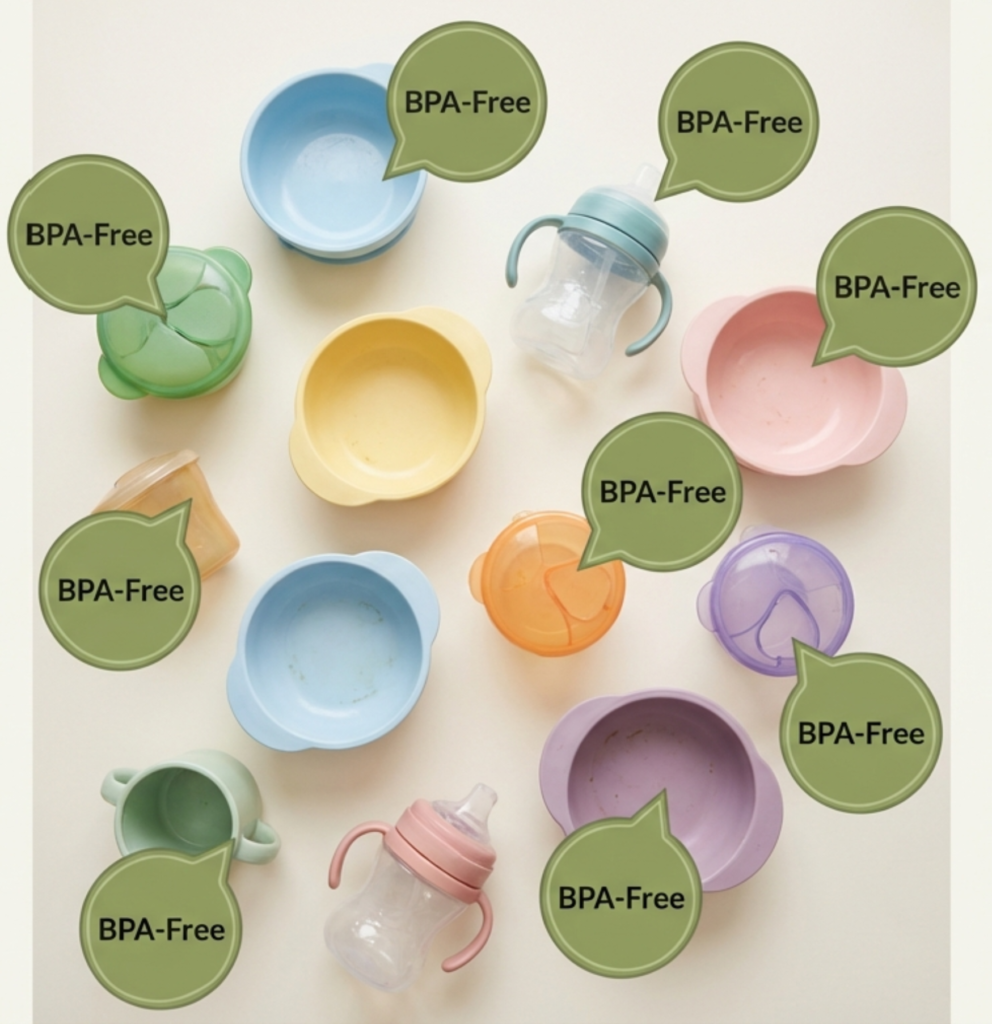
For many parents, seeing a “BPA-Free” sticker on a colorful toddler bowl feels like a sigh of relief. It seems to signal: “this is safe for your child.”

However, as a consultant specializing in pediatric environmental health, I must share a trade secret: that label is often a marketing tactic, not a guarantee of safety.

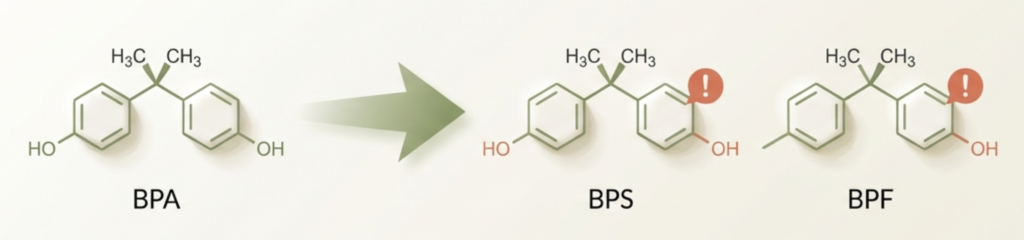
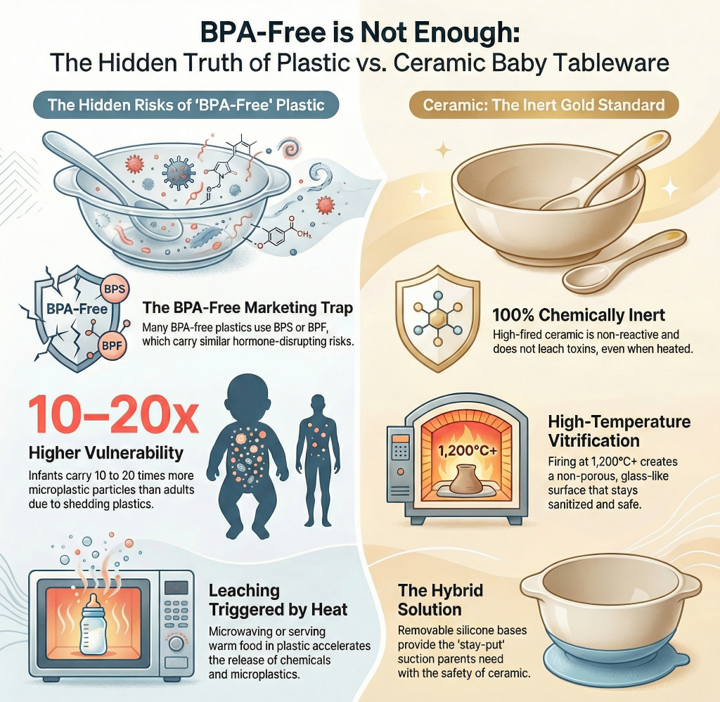
The BPA-Replacement Trap: When manufacturers removed Bisphenol A (BPA), it wasn’t to make the plastic inert—they often replaced it with chemicals like Bisphenol S (BPS). These substitutes share anearly identical structure and pose similar risks regarding hormone disruption.

Key Takeaway: “BPA-Free” does not mean “chemical-free.” Many plastic alternatives still leach chemicals, especially when heated in a dishwasher or microwave.

1 3

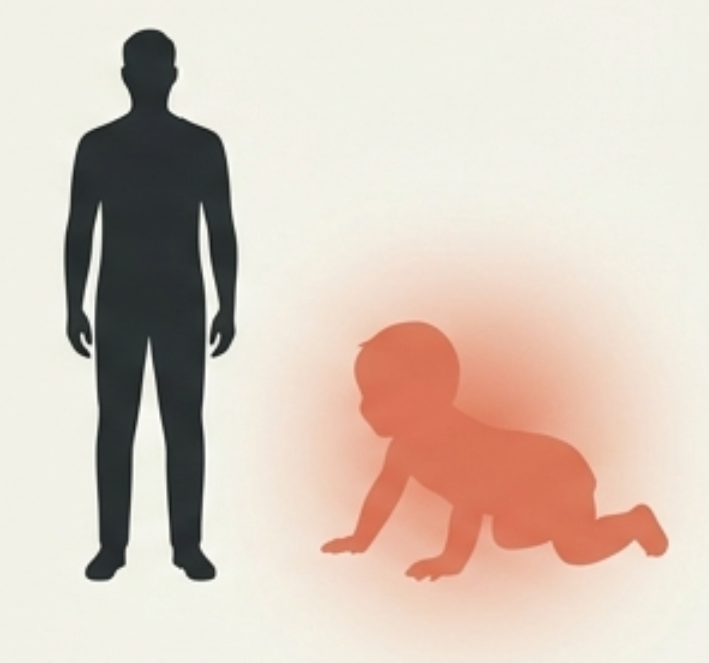
The 10–20x Vulnerability: Microplastics and Your Child

1 4 microplastic

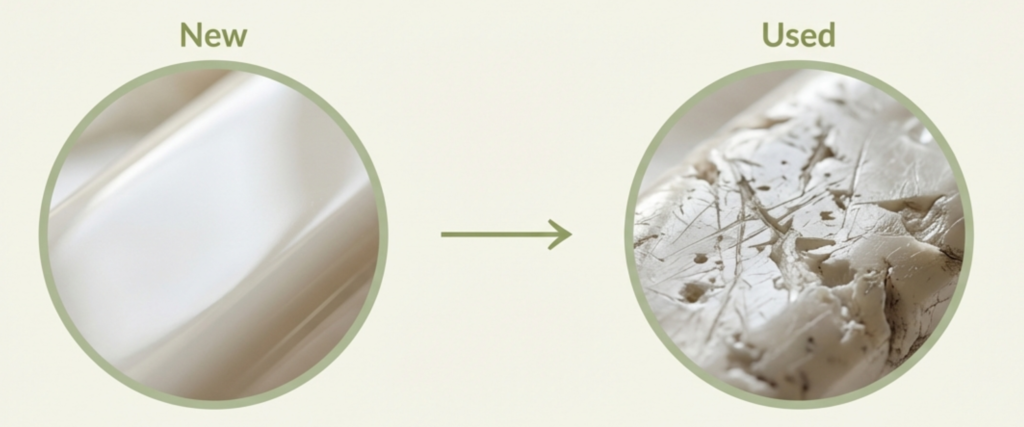
Plastic degrades. It is not permanent. Every scratch from a fork, every cycle in the dishwasher, releases microscopic particles. 

The Result: It’s not just about what leaches out; it’s about physically ingesting the material itself.

Infants are especially vulnerable:

  • Developing Systems: Early-life exposure can disrupt brain, immune, and hormone development.
  • Higher Relative Intake: Babies consume more food and liquid per body weight than adults.
  • Immature Metabolism: Their bodies are less efficient at detoxifying synthetic materials.
  • Long-Term Impact: Exposure during peak neurodevelopment can influence behavior and reproductive health.

Fact: Infants may carry 10–20 times more microplastic particles than adults. These particles have been detected in infant stool, breast milk, and even the placenta.

1 6
1 5

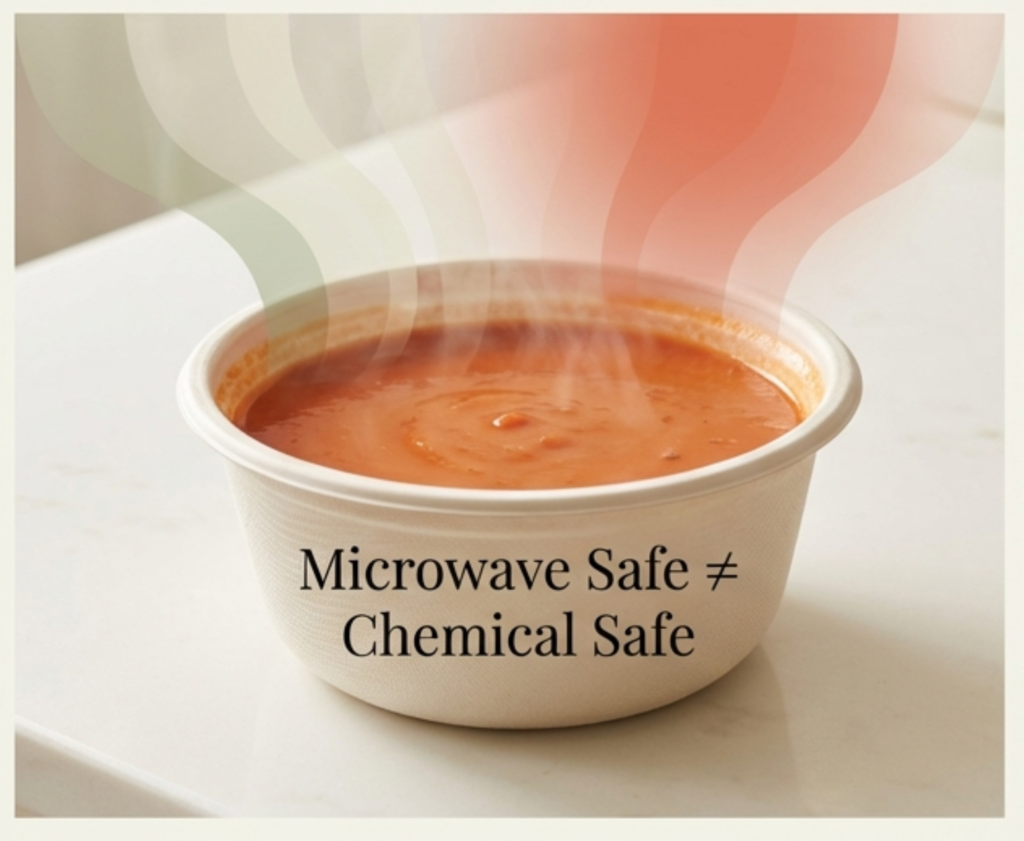
Heat is the Catalyst

  • Heat accelerates chemical migration and microplastic shedding.
  • Microwaving, dishwashers, and hot acidic foods (like tomato sauce) breakdown the polymer matrix.
  • Microwave Safe only means the plastic won’t melt, not that the food is safe.

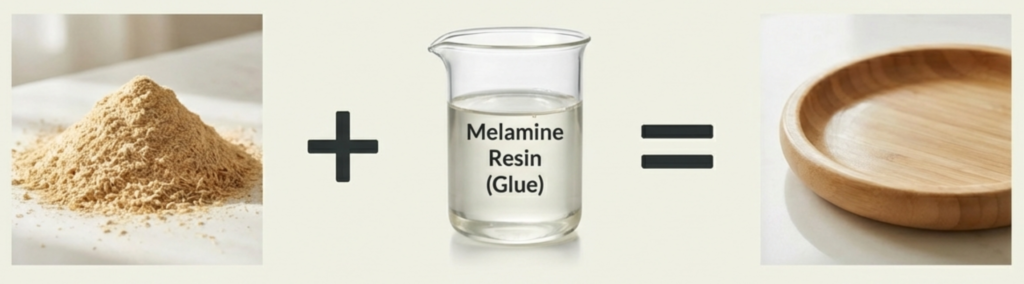
The Bamboo Trap: Greenwashing in Disguise

1 7 bamboo

The Truth: Many “bamboo” toddler plates are ground bamboo powder bound together with synthetic Melamine Resin.

The Risk: Melamine-formaldehyde binders can leach when exposed to heat.

If it feels like plastic, it likely contains plastic binders.

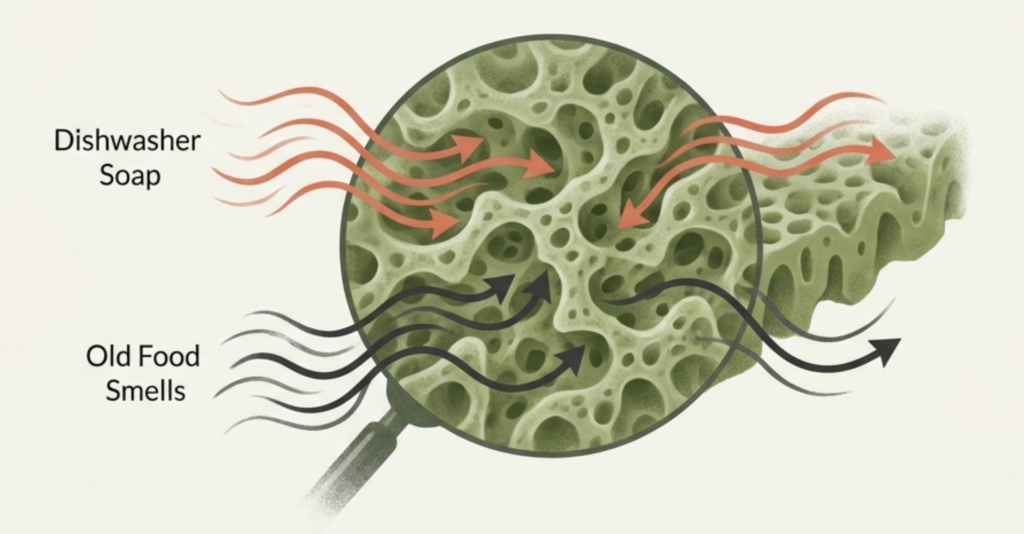
The Silicone Soap Dilemma

1 10 silicone

The Complaint: “Why does my baby’s food taste like soap?”

The Cause: Silicone is porous. In the dishwasher, it expands and absorbs   detergents.

The Consequence: Heat releases these trapped chemicals into food, altering taste and causing picky eating.

1 8

The New Standard: Chemically Inert

  • We need to stop asking “What is removed?” (BPA-Free) and start asking “How does it react?”
  • Definition of Inert: A material that does not chemically react, leach, or change regardless of temperature or acidity.
  • The Goal: Zero interaction between the vessel and the food.
1 9 ceramic

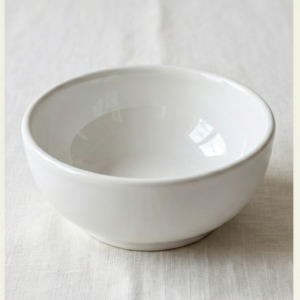
The Return to Ceramic

  • Vitrified: Baked at extreme temperatures to become non-porous.
  • Impermeable: No pores to trap bacteria or soap residue.
  • Stable: Zero leaching of microplastics or chemicals.
  • A return to the material of choice for generations.

Parent’s Checklist: Navigating the Plastic-Free Transition

You don’t need a cupboard full of plastic—just a few high-quality, stable pieces.

Checklist for Safe Tableware:

  • Lead-Free / Cadmium-Free Glaze
  • Certified Dinnerware Safe
  • No “Over-Glaze” Paints on Food Surface
  • Crazing-Free (no fine cracks)
  • Durability Features (silicone sleeve, suction base)
  • Toddler-Appropriate Size

BPA-Free is not enough.

Closing Thoughts: Beyond the Highchair

Mealtime is more than nutrition—it’s a developmental experience. Toddlers explore weight, temperature, and texture of the real world.

By moving past the “BPA-Free” illusion and choosing chemically inert, stable materials, you protect your child’s health and set a lifelong standard.

Expert Tip: Start small. Replace the most-used dishes first. In both parenting and safety, quality beats quantity.

At a Glance

1 bfa free infographic

Leave a Comment

Your email address will not be published. Required fields are marked *

Shopping Cart