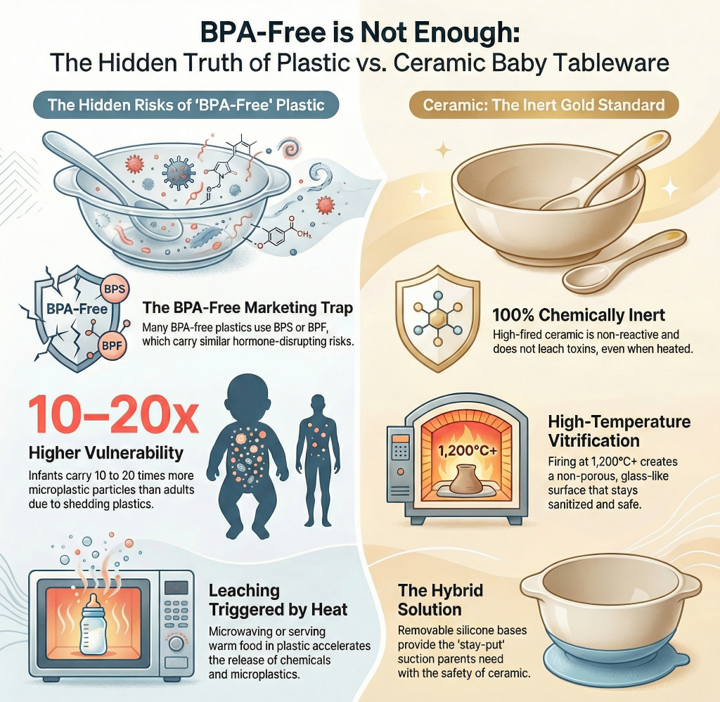
The BPA-Free Mirage: Why Marketing Isn’t Always Safety
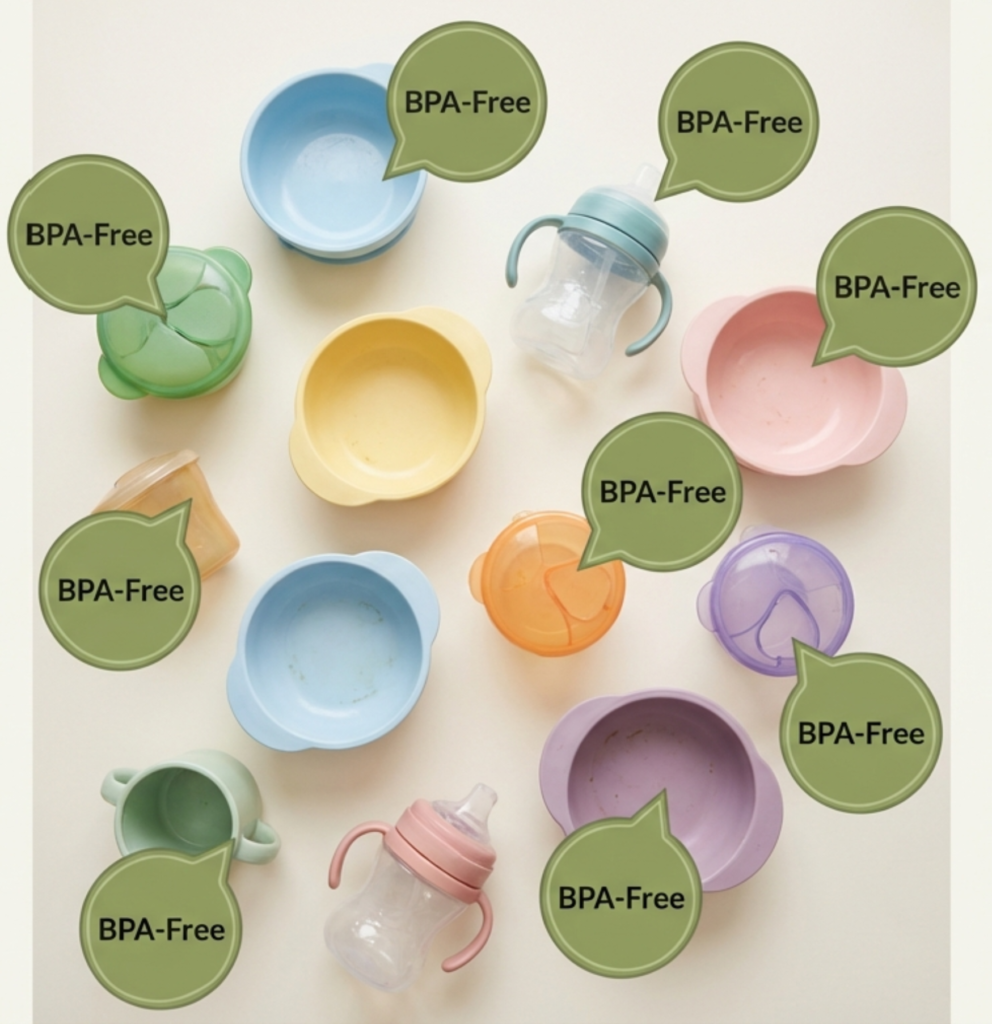
For many parents, seeing a “BPA-Free” sticker on a colorful toddler bowl feels like a sigh of relief. It seems to signal: “this is safe for your child.”
However, as a consultant specializing in pediatric environmental health, I must share a trade secret: that label is often a marketing tactic, not a guarantee of safety.
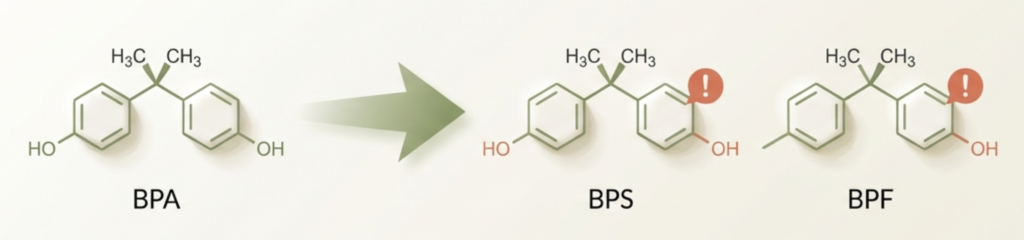
The BPA-Replacement Trap: When manufacturers removed Bisphenol A (BPA), it wasn’t to make the plastic inert—they often replaced it with chemicals like Bisphenol S (BPS). These substitutes share anearly identical structure and pose similar risks regarding hormone disruption.
Key Takeaway: “BPA-Free” does not mean “chemical-free.” Many plastic alternatives still leach chemicals, especially when heated in a dishwasher or microwave.
The 10–20x Vulnerability: Microplastics and Your Child
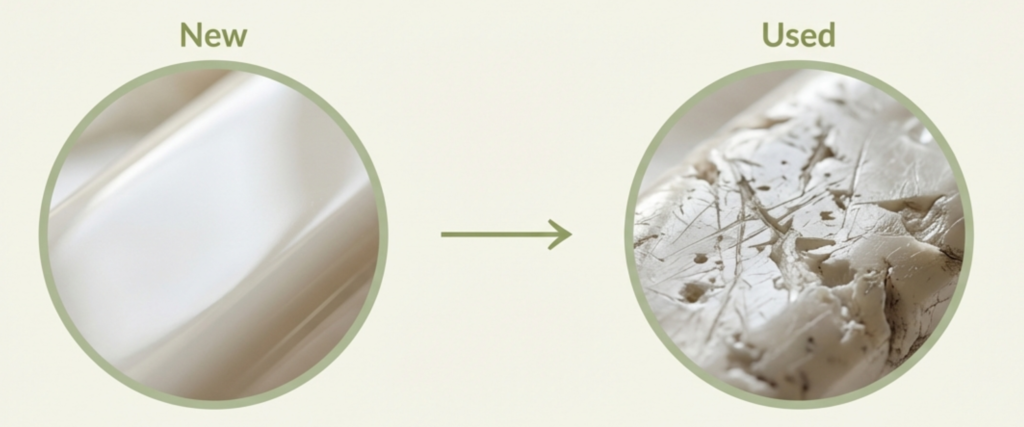
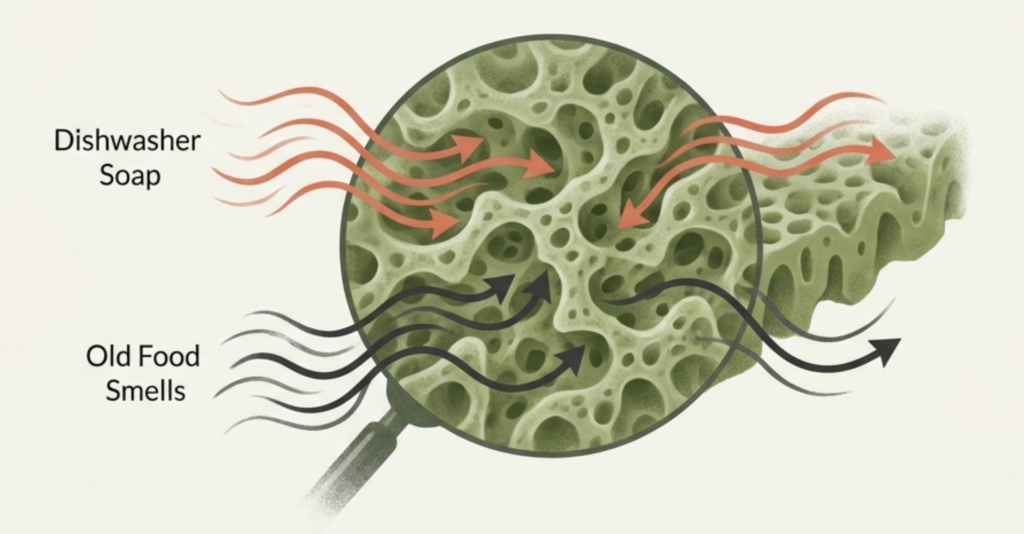
Plastic degrades. It is not permanent. Every scratch from a fork, every cycle in the dishwasher, releases microscopic particles.
The Result: It’s not just about what leaches out; it’s about physically ingesting the material itself.
Infants are especially vulnerable:
Developing Systems: Early-life exposure can disrupt brain, immune, and hormone development.
Higher Relative Intake: Babies consume more food and liquid per body weight than adults.
Immature Metabolism: Their bodies are less efficient at detoxifying synthetic materials.
Long-Term Impact: Exposure during peak neurodevelopment can influence behavior and reproductive health.
Fact: Infants may carry 10–20 times more microplastic particles than adults. These particles have been detected in infant stool, breast milk, and even the placenta.
Heat is the Catalyst
Heat accelerates chemical migration and microplastic shedding.
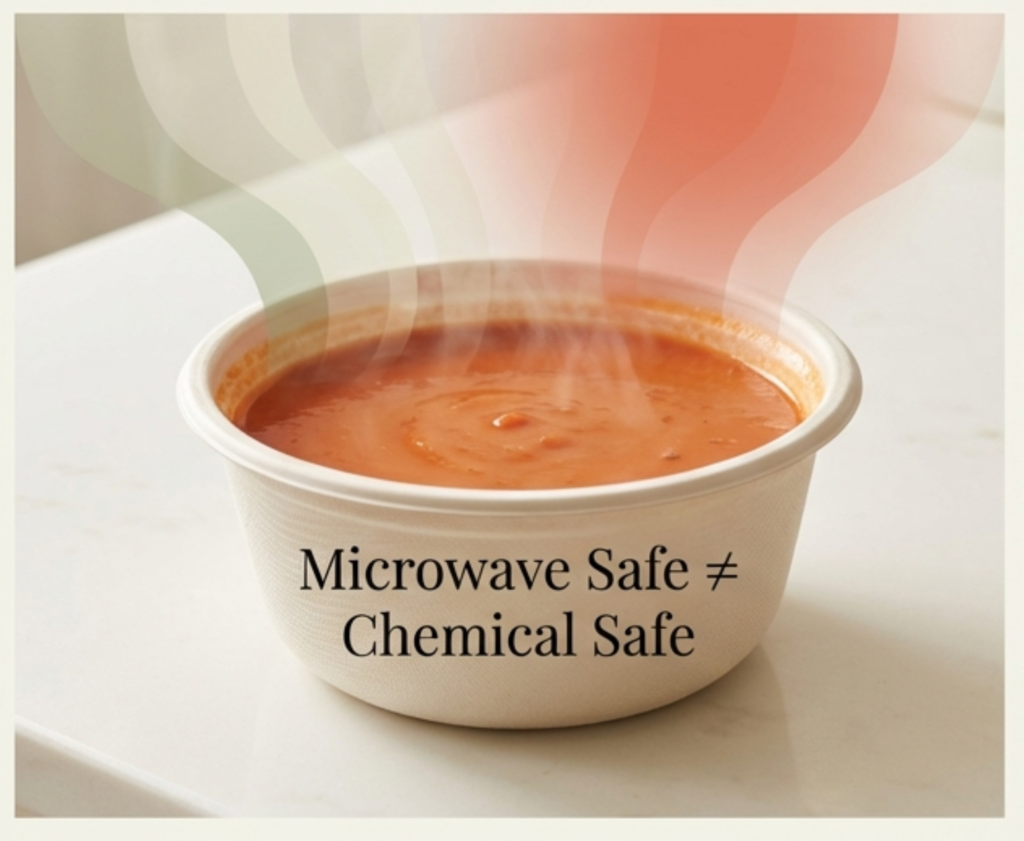
Microwaving, dishwashers, and hot acidic foods (like tomato sauce) breakdown the polymer matrix.
Microwave Safe only means the plastic won’t melt, not that the food is safe.
The Bamboo Trap: Greenwashing in Disguise
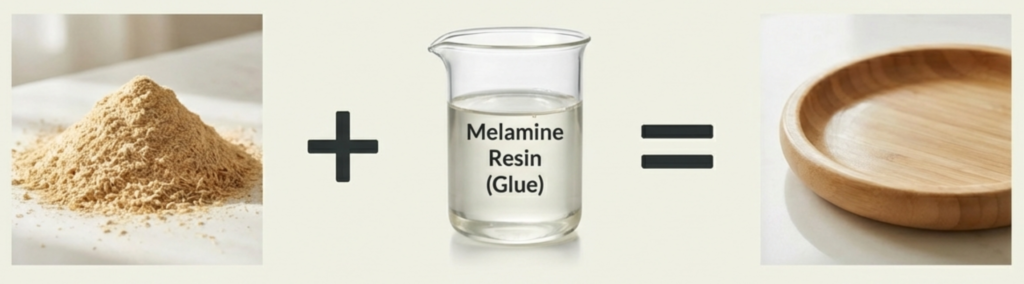
TheTruth: Many “bamboo” toddler plates are ground bamboo powder bound together with synthetic Melamine Resin.
TheRisk: Melamine-formaldehyde binders can leach when exposed to heat.