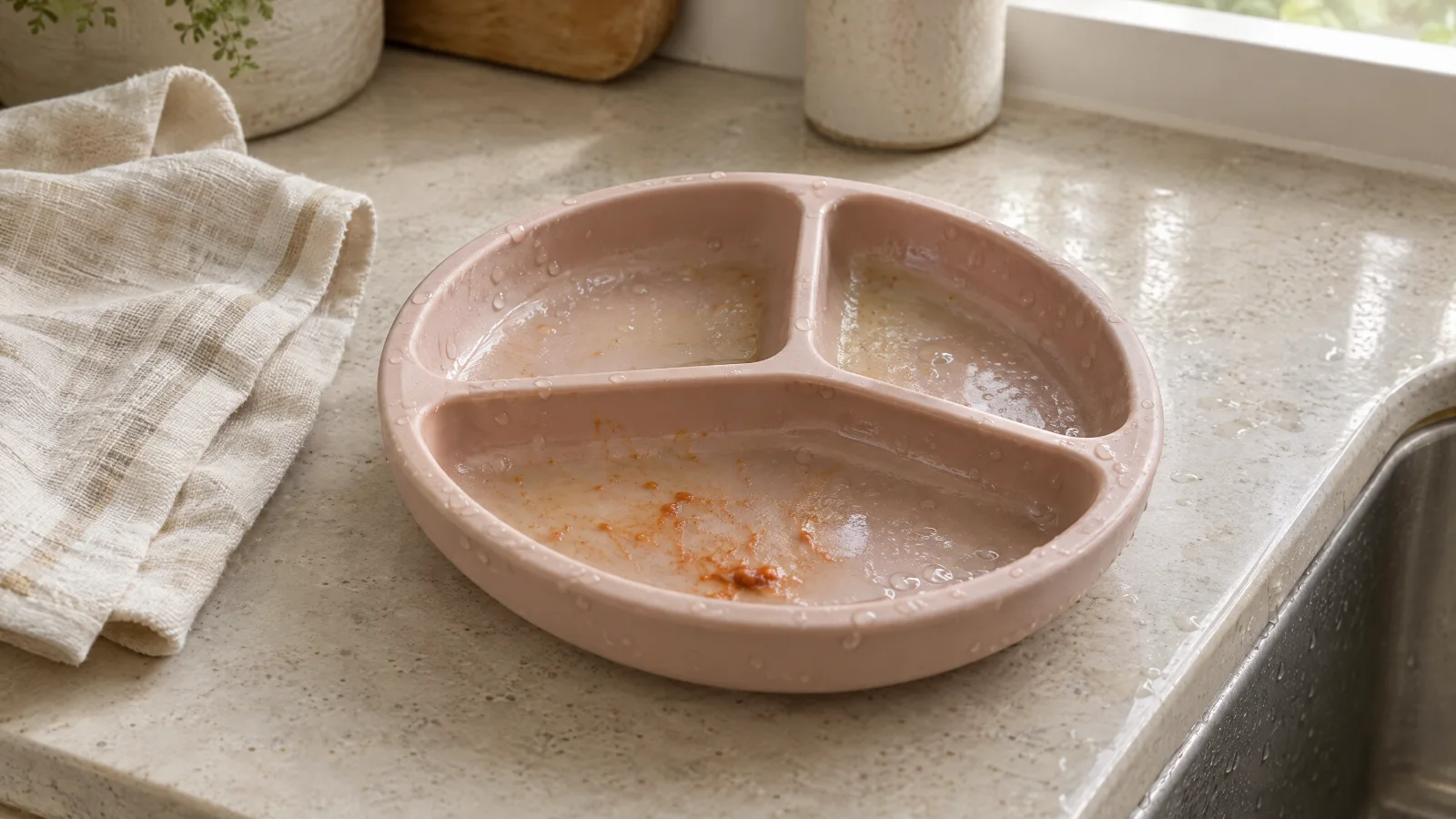
Silicone is lipophilic: it draws oil and fragrance into its surface. Over months that makes a silicone baby plate feel greasy after washing, hold food smells and pass a dish-soap taste to warm food. Unscented detergent, a vinegar soak or, for oven-safe silicone, a low-oven bake resets it for a while, but nothing stops it for good.
Silicone became the default baby plate for good reasons. It is soft, it doesn’t shatter when it’s thrown, it has no BPA, and most of it can go in the microwave and the dishwasher. For the first few weeks it is hard to fault.
Then the plate starts to feel slightly tacky after washing. It smells of last night’s pasta sauce. Your toddler takes one bite of plain rice and pushes it away. None of this means you are washing it wrong. It comes from what silicone is.
Why silicone holds on to things
Researchers describe silicone as “highly lipophilic”: it attracts fats and oily compounds, and it “sequesters” organic chemicals it comes into contact with. Scientists at Oregon State University put that property to work by turning plain silicone wristbands into personal chemical samplers; the bands can pick up more than 1,500 organic chemicals, fragrances included (Howe et al., American Journal of Human Biology, 2026).
A baby plate is not a wristband, but the material behaves the same way at the sink. As Consumer Reports puts it, silicone is “nonporous, at least on a larger scale.” Liquids don’t pass through it, but oils and scents can still work their way into the surface.
1. A greasy film that soap doesn’t remove
Butter, cheese, avocado, olive oil and full-fat yogurt all leave oil behind. On porcelain or glass it rinses away. On silicone some of it stays in the surface, so the plate feels slick or faintly sticky even straight out of the dishwasher. A housewares executive interviewed by Consumer Reports said that when silicone changes the taste of food, built-up oil residue is the most common cause.
2. Smells that outlast the meal
Garlic, curry, tomato sauce and fish are the usual culprits. The smell is still there the next morning, and warm food tends to bring it back out, so breakfast can arrive with a hint of last night’s dinner.
3. The taste of dish soap
Scented dish soaps and dishwasher detergents are made to leave fragrance behind, and on silicone they do. A faint soap smell that an adult barely notices can be enough for a toddler to refuse a food they ate happily yesterday.
4. Orange and red stains
The colours in tomatoes, carrots, sweet potato and turmeric dissolve in fat. On a light-coloured silicone plate they settle in with the oil and leave an orange tint that scrubbing rarely lifts. It is harmless, but the plate stops looking clean.
5. Lint, crumbs and hair
The same slightly grippy surface that keeps a silicone plate in place is good at collecting lint from a tea towel and hair from the floor. Most parents end up air-drying it upside down.
6. Suction that turns into a game
Many silicone plates rely on a suction base. Suction needs a smooth, clean tray, and a determined one-year-old soon learns that a corner can be lifted. Once the edge lets go, the whole plate comes up with it.
What helps, and what doesn’t
These are the fixes suggested by the experts Consumer Reports interviewed:
- Switch to unscented dish soap and dishwasher detergent, so there is less fragrance to absorb.
- Soak the plate in equal parts water and white vinegar for about four hours to remove most odours.
- If the plate is 100% silicone and oven-safe, bake it, freshly washed, at about 250 °F (120 °C) for 20–30 minutes.
- When you buy, choose platinum-cured silicone, which is less likely to take on flavours. Less likely, not immune.
They help, and they are worth doing. But they reset the plate; they don’t change it. As a kitchenware product manager told the magazine, “there is no way to fully prevent [silicone] from taking on flavors or smells.”
When silicone is still the right choice
For travel, the diaper bag, daycare and the months when plates still go overboard, silicone is hard to beat. Nothing here is a reason to throw out what works. It is a reason to think about the surface your child eats from every day at home.
A surface that doesn’t absorb
Vitrified porcelain is the opposite case. The Harmonized System notes used for customs classification describe porcelain and china as “almost completely vitrified, hard, and are essentially impermeable” (Canada Border Services Agency). Oil rinses off, smells leave with the food, and there is nowhere for soap to settle.
We kept silicone where it is good: underneath. Our plate sits in a food-grade silicone base that holds it steady and turns over to cover the plate for the fridge, while the food sits on porcelain. For all three materials side by side, see Silicone vs. Stainless Steel vs. Porcelain Toddler Plates.
Why does my silicone plate feel greasy after washing?
Silicone attracts oils, so some of the fat from foods such as butter, cheese and avocado stays in the surface after a normal wash. Hot water with an unscented, grease-cutting soap helps, and a vinegar soak or a low-oven bake can reset the plate for a while.
How do I get the smell out of silicone plates?
Try a four-hour soak in equal parts water and white vinegar. If the plate is 100% silicone and oven-safe, baking it clean at about 250 °F (120 °C) for 20–30 minutes also helps. Switching to unscented soap slows the smell coming back.
Why does food on a silicone plate taste like soap?
Fragrance from scented dish soap and dishwasher detergent is absorbed into the silicone and can pass to warm or fatty food. Unscented detergent is the most effective fix.
Is platinum silicone better for baby plates?
Platinum-cured silicone is less likely to take on flavours than standard food-grade silicone, according to experts interviewed by Consumer Reports, but it is not immune. It can still absorb smells and soap over time.
Keep reading
- Porcelain vs Stainless Steel vs Silicone Toddler Plates
- The Downsides of Stainless Steel Kids’ Plates
- Is BPA-Free Plastic Safe for Toddler Plates?
The plate this series is about. okiboo’s 8-inch divided porcelain toddler plate sits in a flat silicone base that holds it steady without suction cups, then lifts off and covers the plate for the fridge. Lab-tested for lead and cadmium, microwave and dishwasher safe.