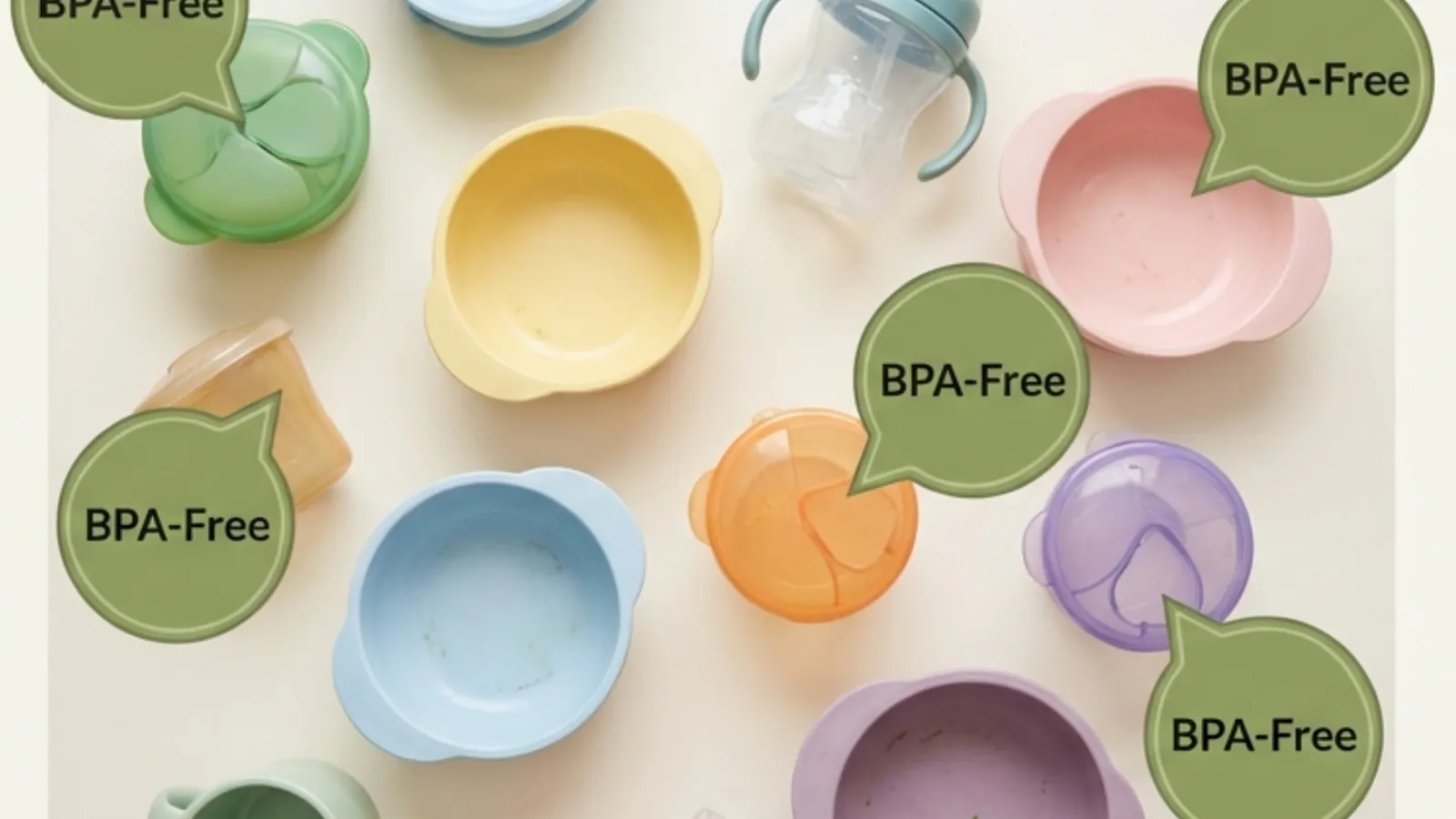
Not necessarily. “BPA-free” only means bisphenol A is absent. Its common replacements, BPS and BPF, were about as hormonally active as BPA in a 2015 systematic review, and all plastic sheds microplastics as it wears. For hot food, porcelain or glass avoids both problems.
The “BPA-Free” Mirage: Why Marketing Isn’t Always Safety
For many parents, seeing a “BPA-Free” sticker on a colorful toddler bowl feels like a deep sigh of relief. It’s a green light that says, “this is safe for your baby.” But the label solves a PR problem better than a toxicological one: it tells you one chemical is missing, not that the plastic is safe.
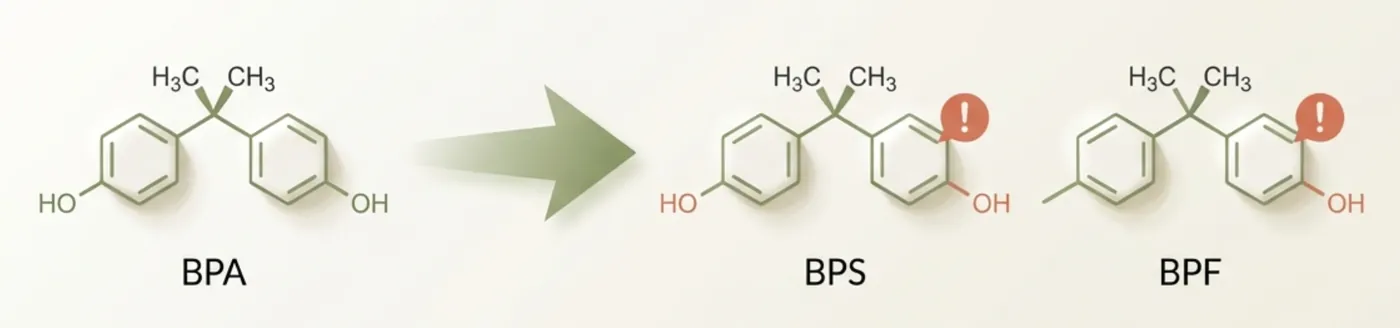
The reality is the “BPA-Replacement” trap. When manufacturers removed Bisphenol A, they didn’t necessarily make the plastic inert. Instead, they substituted it with other bisphenols like BPS (Bisphenol S), which a 2015 systematic review in Environmental Health Perspectives found to be about as hormonally active as BPA. A label that says “BPA-Free” tells you what isn’t there, but it remains silent on the cocktails of other plasticizers and additives that still leach into food, especially when exposed to the high heat of a dishwasher or microwave.
Key Truth: “BPA-Free” does not mean “Chemical-Free.” Most plastic alternatives utilize replacement chemicals (like BPS) that still migrate into your child’s food. Marketing labels often hide the fact that the material is still chemically active and capable of leaching.
While invisible chemical leaching is a major concern, we must also look at the physical reality of how plastic breaks down into microplastics.
The 10x Finding: Understanding the Microplastic Crisis
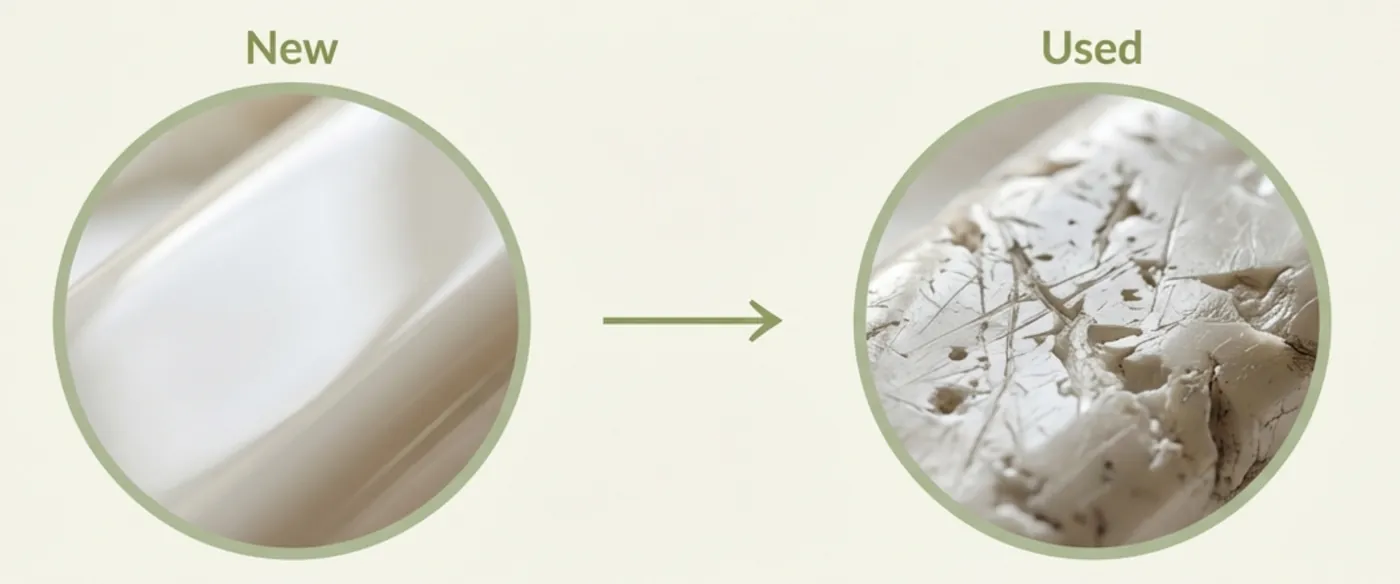
Microplastics are the tiny, often microscopic fragments that shed from plastic bottles, plates, and utensils as they wear down. While we are all exposed to them, the developmental window of infancy makes this “dosage” a critical concern.
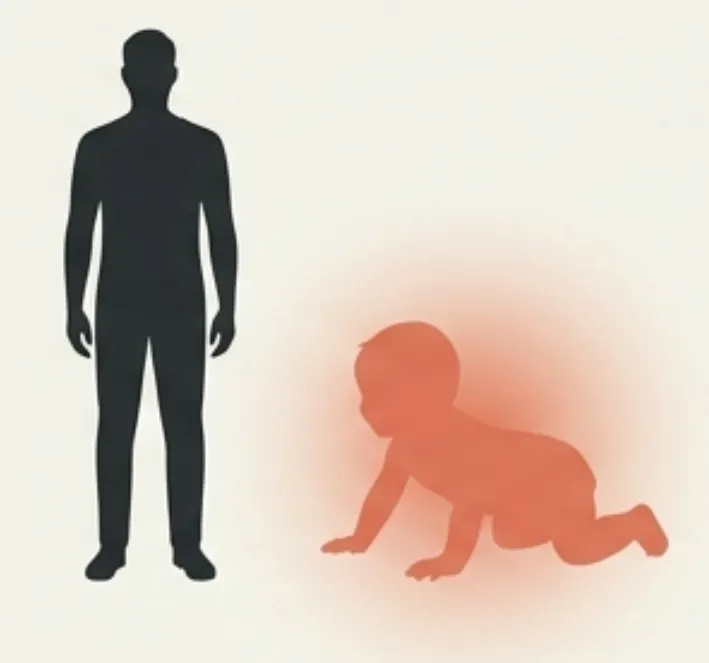
A small 2021 study from New York University School of Medicine found that the median level of PET microplastic in infant stool was more than 10 times the adult level (about 36,000 vs 2,600 ng/g; six infants and ten adults were tested; Environmental Science & Technology Letters). Because a child’s body is still building its primary defenses, the relative load of these particles is significantly higher per pound of body weight. These particles don’t just pass through; they have been detected in infant stool, breast milk, and even the placenta.
Why Infants are at Higher Risk:
Developing Systems: Researchers are still working out what early-life exposure does. The concern is that it coincides with the fastest growth of the brain, the immune system and the hormone (endocrine) system.
Higher Relative Intake: Infants consume more food and liquid relative to their body weight than adults, leading to a concentrated ingestion of particles.
Immature Metabolism: A child’s body is less efficient at detoxifying and clearing foreign synthetic materials during the rapid growth phases of the first 1,000 days.
If plastic is the problem, parents need a better roadmap to evaluate the so-called “safe” alternatives.
The Material Minefield: Evaluating Common Alternatives
The “eco-friendly” market is a minefield where parents are often forced to choose between the convenience of an unbreakable bowl and the long-term health of their child.
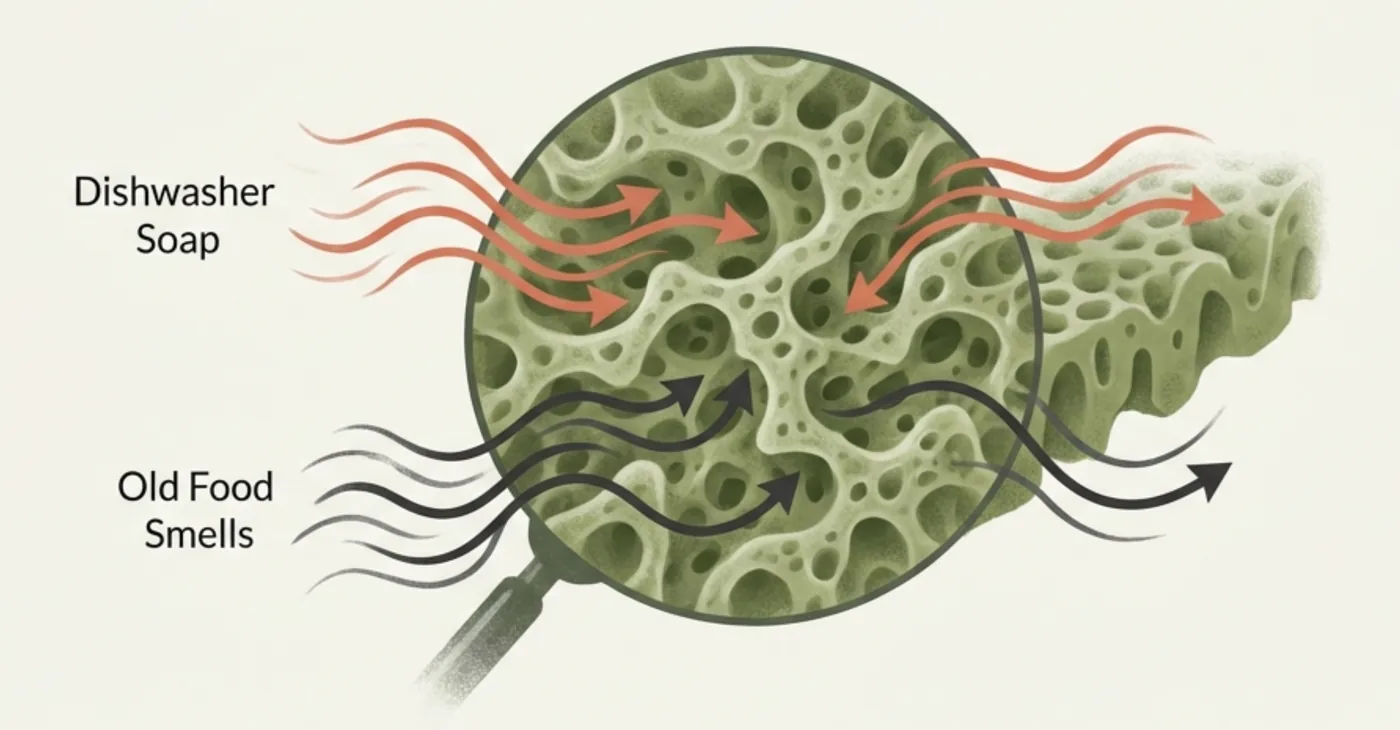
While silicone is a favorite for its soft, bendy texture, the frequent complaint that it makes food taste like soap is a sign it has absorbed fragrance from detergent and is releasing it into warm food. For hot food, the better move is a material that is chemically inert.
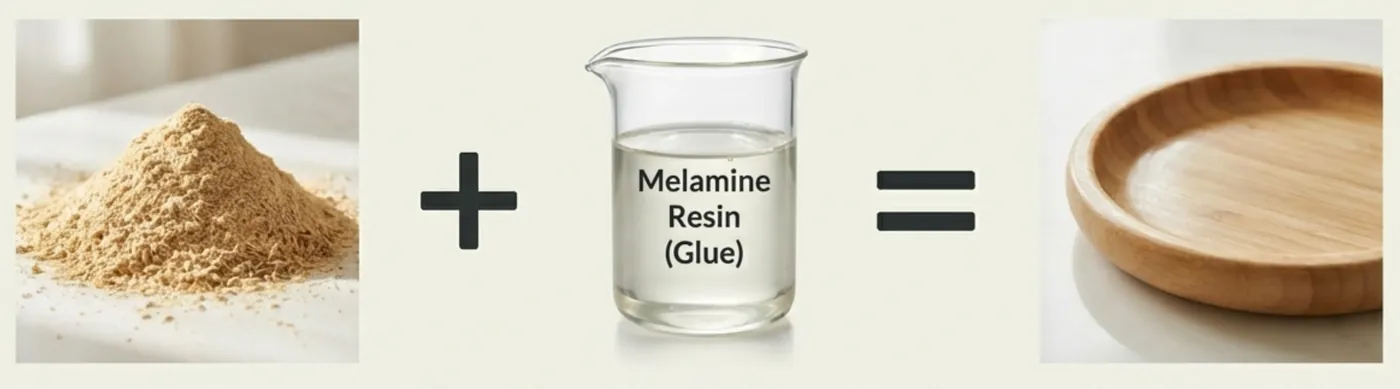
The Ceramic Solution: Achieving Absolute Chemical Inertness
In toxicology, the gold standard is “chemical inertness.” An inert material does not react with its environment or leach substances into the food it holds. High-fired ceramic and porcelain are the ultimate defense because they are physically and chemically stable.
Lab-tested ceramic doesn’t require the plasticizers or melamine binders found in synthetic plates. Beyond the safety data, there is a profound sensory benefit: ceramics hold warmth longer, keeping a meal at a comforting temperature, and they provide a “soft chime” when met with a spoon—a sensory cue for care and quality that plastic cannot replicate.
Many parents fear breakage, but there is a professional middle ground. The answer is porcelain paired with a silicone base or sleeve. This gives you the chemical safety of ceramic with the durability of a protective sleeve—the “Professional’s Choice” for a plastic-free transition.
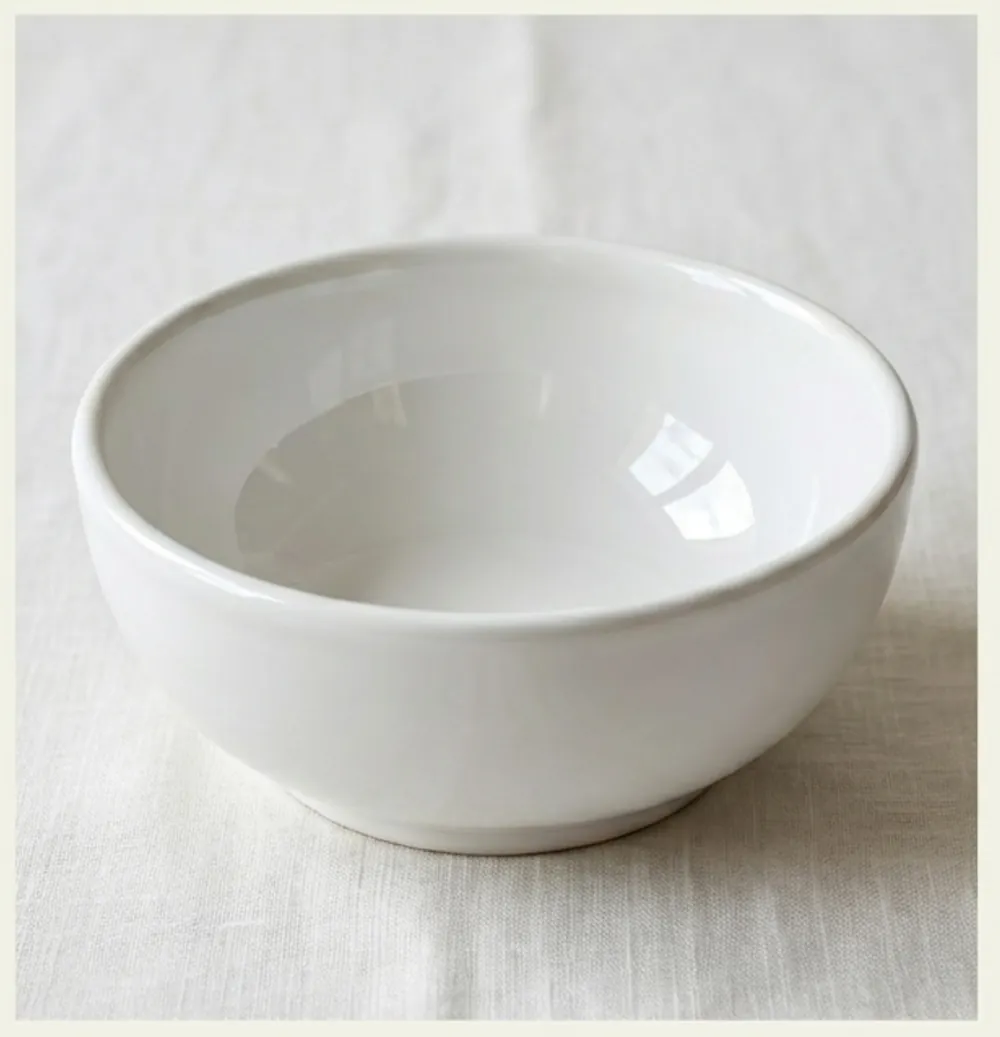
The Three Pillars of Ceramic Safety:
Non-Porous Surface: High-firing vitrifies the clay into a dense body that won’t absorb bacteria or odors.
Chemical Stability: Unlike plastic, quality glazes don’t degrade or release bisphenols when exposed to acidic foods like tomato sauce.
Absence of Synthetics: No need for chemical plasticizers or formaldehydes to maintain the structure of the dish.
A Parent’s Checklist: Navigating the Transition to Plastic-Free
Transitioning to a “Plastic-Zero” kitchen is a journey of quality over quantity. You don’t need a cupboard full of cheap plastic; you need a few high-quality, stable pieces.
Watch for the Label Trap: Be wary of “AP (Approved Product)” seals on ceramic sets. While this means the item is safe to handle as an art supply, it is not a dinnerware-safety certification. Always look for “Dinnerware Safe” labels, which ensure the piece has been tested for food contact and is free from “crazing.” Crazing is a technical defect caused by a thermal expansion mismatch between the glaze and the clay; it creates a network of fine cracks that harbor bacteria and make the dish impossible to truly sanitize.
The Household Substitution Strategy: You don’t always need to buy new. For training cups, many experts recommend upcycling small glass jelly jars or Costco tiramisu cups. They are the perfect size for little hands, made of thick, durable glass, and cost nothing to “reclaim” from your pantry.
Safe Shopping Checklist:
[ ] Lead and cadmium tested: The glaze has passed lab tests for lead and cadmium.
[ ] Dinnerware Safe: Avoid items marked only as “Food Safe” or “Decorative.”
[ ] No “Over-Glaze”: Ensure there are no painted decorations on top of the glaze where food touches.
[ ] Crazing-Free: Surface is smooth with no fine web-like cracks (bacteria risk).
[ ] Durability Features: Piece sits in a silicone base for younger toddlers.
[ ] Appropriate Size: Sized for children.
Closing Thoughts: Beyond the Highchair
Mealtime is more than just a delivery system for nutrients; it is a vital developmental window. It is an opportunity for your child to experience the weight, temperature, and texture of the real world without the interference of synthetic chemicals. By moving away from the “BPA-Free” mirage and choosing inert, stable materials, you are protecting the integrity of their developing systems and setting a standard for their lifelong health.
Our note: Focus on a “slow swap” strategy. You don’t need to toss everything today. Start with the dishes that touch hot food, and replace them with one or two certified ceramic pieces. In safety, as in parenting, quality is always a better investment than quantity.
Updated September 2026: added a short answer and a source for the BPS research, and removed claims we could not source.
Is BPA-free plastic safe for toddler plates?
It is better than plastic that contains BPA, but it is not the same as safe. Common substitutes such as BPS and BPF were about as hormonally active as BPA in a 2015 systematic review, and all plastic sheds microplastics as it wears. For hot food, porcelain or glass is the simpler choice.
What is a safer alternative to plastic toddler plates?
Vitrified porcelain or tempered glass for meals at home, and stainless steel where a break is not an option. Porcelain goes in the microwave and the dishwasher; steel goes in the dishwasher only. Compare the materials side by side.
Keep reading
- Are Bamboo Kids’ Plates Safe? The Melamine Problem
- Microwave & Dishwasher Safety—Heating Without the Chemical Worry
- How Long Do Toddler Plates Last? Plastic vs Ceramic
The plate this series is about. okiboo’s 8-inch divided porcelain toddler plate sits in a flat silicone base that holds it steady without suction cups, then lifts off and covers the plate for the fridge. Lab-tested for lead and cadmium, microwave and dishwasher safe.