
Montessori practice says yes. Children are given real glass and ceramic dishes early on, because handling something that can break teaches care and control that a plastic plate never asks for. Start once your child feeds themselves, with a plate that sits in a non-slip base.
As parents, our first instinct is often to protect. We buy unbreakable plastic bowls and soft silicone spoons to ensure that if a dish goes flying, nothing breaks. But have you ever wondered what message that sends to your child?
In the world of Montessori baby feeding, there is a beautiful, counterintuitive philosophy: give them “real” things. Today, we’re exploring why the switch from plastic to ceramic is more than just an aesthetic choice—it’s a powerful tool for building a child’s independence and self-esteem.
The “Capable Child”: A Montessori Foundation
The heart of Montessori education is treating even the youngest children as capable participants in the household. When we serve a toddler’s meal on a lightweight plastic tray while we eat off beautiful ceramic, we create a silent divide. By teaching your child to use real plates, we signal that they are worthy of the same quality and “grown-up” experience as the rest of the family.
The Lesson of the “Gentle Clink”
One of the most important aspects of child development is learning respect for objects. Ceramic offers a sensory landscape that plastic simply cannot match:
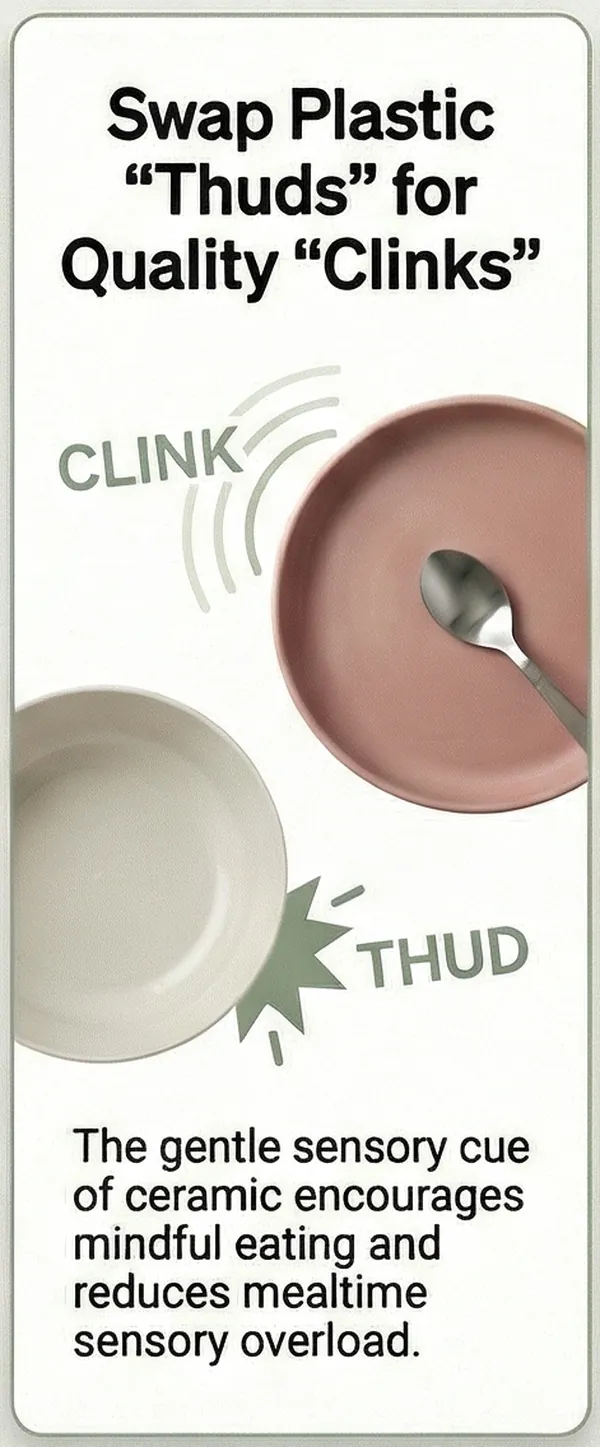
- The Sound: Ceramic makes a “gentle clink” when a spoon touches the rim, acting as a natural cue for a calm mealtime environment.
- Natural Consequences: In Montessori, breakability isn’t a flaw—it’s a teacher. Using a breakable item teaches motor control and mindfulness; if a child is too rough, they learn through the natural consequence of the item breaking.
Building Confidence and Motor Skills
When a child successfully handles a “real” dish, it provides a massive boost to their independence at mealtime. This process involves:
- Refining Fine Motor Skills: Handling a real porcelain dish asks for more care and coordination than a plastic one.
- Developing Responsibility: Learning that eating from ceramic is a privilege that comes with responsibility helps children take pride in their actions.
Reducing Throwing: Interestingly, many parents in communities like Reddit find that when a dish feels like a “real” object rather than a toy, toddlers are less inclined to treat it as a puzzle to be solved and thrown.
The Safety Net: Our Ceramic-Silicone Hybrid
We know that “pure” breakability can be terrifying for a parent of a one-year-old. That is why our brand created a Hybrid Solution to bridge the gap between safety and the Montessori philosophy:
- The “Real” Experience: The core of our dish is high-fired, non-toxic ceramic that gives your child that authentic “grown-up” feel and sound.
- The Protective Base: Our removable silicone base acts as a shock absorber. It provides the “stay-put” stability needed for toddlers while minimizing the risk of a catastrophic shatter if the plate is dropped.
- A Rite of Passage: As your child grows more confident, the silicone base can be removed, allowing the plate to transition into a “big kid” dish that they can use for years to come.
The Bottom Line
Mealtime is a daily ritual of care. By trusting your child with “real” tableware, you aren’t just serving them food; you are serving them confidence, respect, and a sense of belonging at the family table.
Ready to try it? See our divided porcelain plate, set in a silicone base that holds it steady and turns over to cover the plate for the fridge.
Updated September 2026: added a short answer and questions parents ask, and corrected the starting age.
When can a toddler start using a ceramic plate?
Usually from around the first birthday, once your child feeds themselves and has stopped throwing dishes. A base that stays put helps while they learn.
Is it safe to give a toddler a breakable plate?
With a plate that has passed lead and cadmium testing, a stable base and an adult at the table, yes. The trade-off is that porcelain can chip or break if it lands on a hard floor, so wait until the throwing phase has passed.
Keep reading
The plate this series is about. okiboo’s 8-inch divided porcelain toddler plate sits in a flat silicone base that holds it steady without suction cups, then lifts off and covers the plate for the fridge. Lab-tested for lead and cadmium, microwave and dishwasher safe.