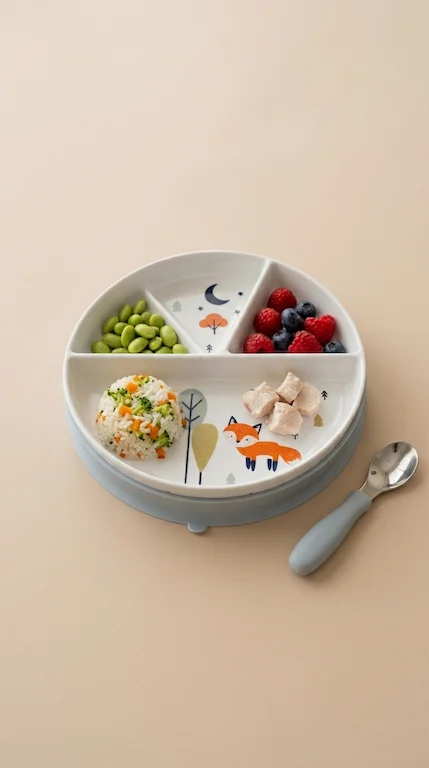
Often, yes. Separate sections keep foods from touching, which many toddlers prefer, and let you put a small taste of something new next to a food your child already eats, which is an easier ask than a mixed plate.
If you have a toddler who treats a stray pea touching their mashed potatoes like a culinary emergency, you aren’t alone. For many children, food touching isn’t just a preference—it’s a sensory hurdle.
The Psychology of “Safe Zones” for Picky Eaters
For a child with a sensitive palate, a large, open plate can feel overwhelming. When different textures and flavors bleed into one another, it creates “sensory clutter.”
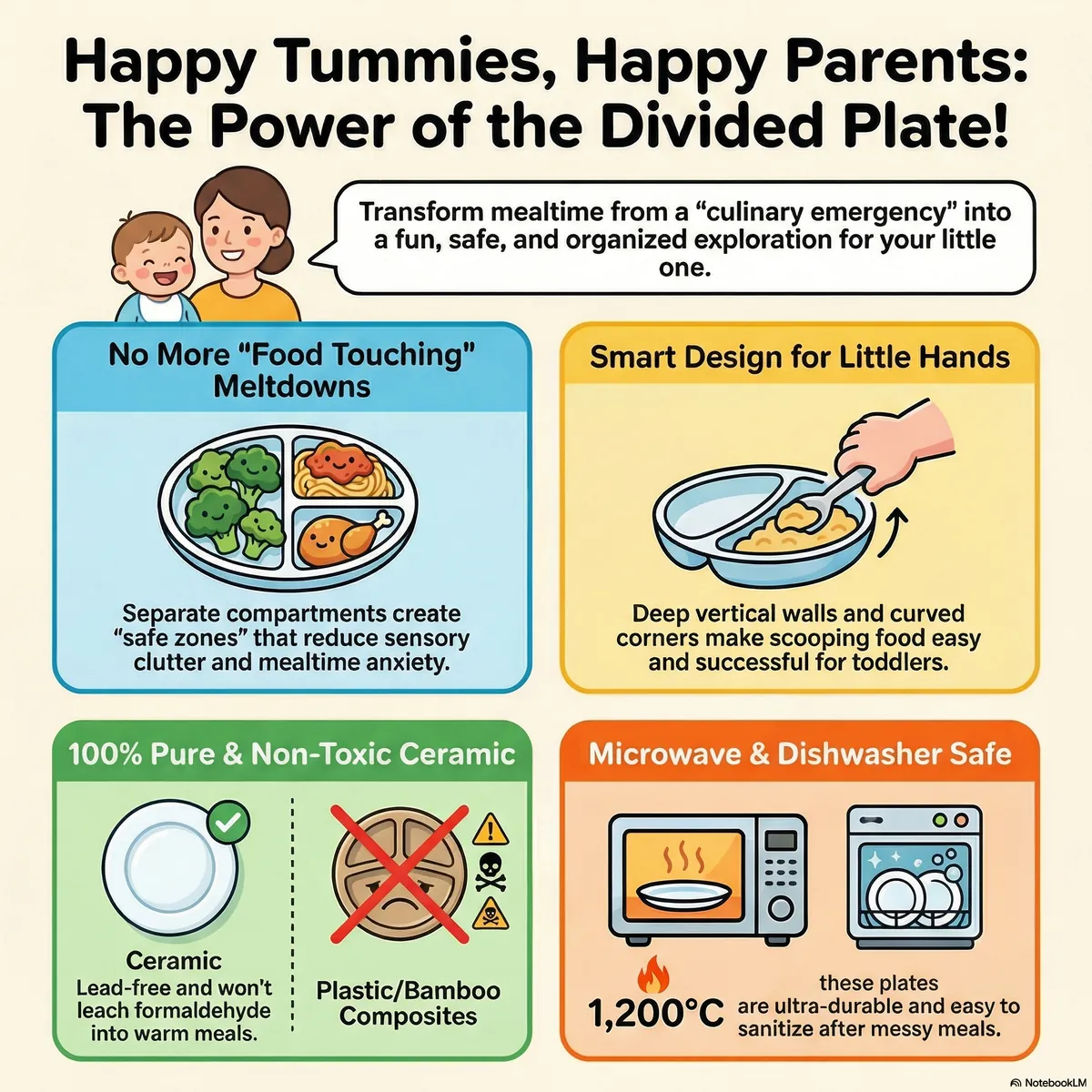
Divided plates for picky eaters provide clear, visual boundaries. By keeping the broccoli separate from the rice, you are giving your child “safe zones.” This visual organization reduces mealtime anxiety, making them more likely to try a new food because they know it hasn’t “contaminated” their favorite familiar snack.
Mastering Baby-Led Weaning (BLW) and Portion Control
Divided plates aren’t just for separation; they are excellent for portion control for toddlers. They serve as a visual guide for parents to provide a balanced meal:
- The Main Section: For a primary protein or carbohydrate.
- The Side Sections: For exploring new textures, such as a colorful fruit or a steamed vegetable.
This variety is essential for BLW, where the goal is to introduce various flavors without them turning into a “mystery mush.”
The Safety Factor: Why Ceramic Matters in Divided Designs
While many divided plates are made of bamboo or plastic, these materials carry hidden risks. As we’ve explored, many “natural” bamboo plates are actually bamboo composites held together by melamine-formaldehyde resins. When exposed to warm meals, these binders can leach formaldehyde—a known toxin—directly into your child’s food.
Furthermore, these resin-based plates can absorb water and harbor mold, or even crack in the dishwasher, creating choking hazards.
Our divided porcelain plate is the alternative we make:
- Chemically Inert: Ceramic is non-reactive and won’t leach toxins, no matter the acidity or temperature of the food.
- Vitrified Surface: Fired at 1,200–1,300 °C, our ceramic has a glass-like surface with zero glues or plastic binders.
- Ease of Use: Unlike bamboo, ceramic is completely dishwasher and microwave safe, allowing you to sanitize the plate easily after a messy meal.
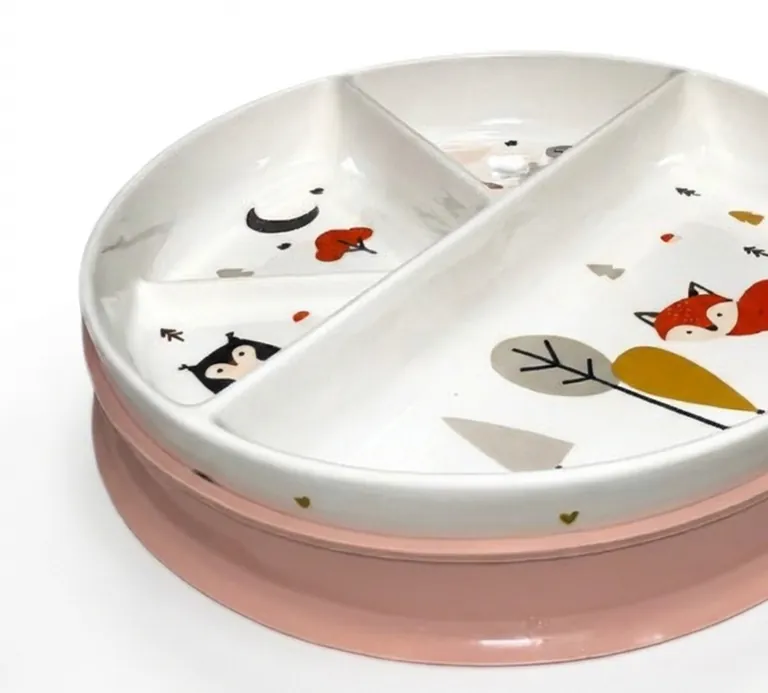
The “Scooping Secret”: Designed for Little Hands
The most frustrating part of learning to eat is when food slides right off the edge of the plate. We’ve designed our ceramic divided plates with specific functional features to support motor skill development:
- Walls to push against: each section is about an inch deep, so when your child pushes the spoon against the side, the food stays on the spoon instead of sliding onto the table.
- Engineered Curvature: The interior corners are slightly curved to match the shape of standard toddler spoons, making the “scooping” motion feel natural and successful.
The Bottom Line
A divided plate is more than just a way to keep food separate; it’s a tool for confidence. By combining the psychological comfort of organized sections with the safety of lab-tested, formaldehyde-free ceramic, you are setting the stage for a lifetime of healthy, independent eating.
Ready to try it? See the divided porcelain plate: 8 inches across, set in a silicone base that holds it steady without a suction cup.
Updated September 2026: added a short answer and questions parents ask, and corrected product details.
Do divided plates help picky eaters?
They often do. Keeping foods apart suits children who dislike foods touching, and a separate section lets you offer a small taste of something new beside a food they already eat.
What age is a divided porcelain plate for?
Usually from around the first birthday, once your child feeds themselves and has stopped throwing dishes. The same plate stays useful into the early school years.
Keep reading
The plate this series is about. okiboo’s 8-inch divided porcelain toddler plate sits in a flat silicone base that holds it steady without suction cups, then lifts off and covers the plate for the fridge. Lab-tested for lead and cadmium, microwave and dishwasher safe.