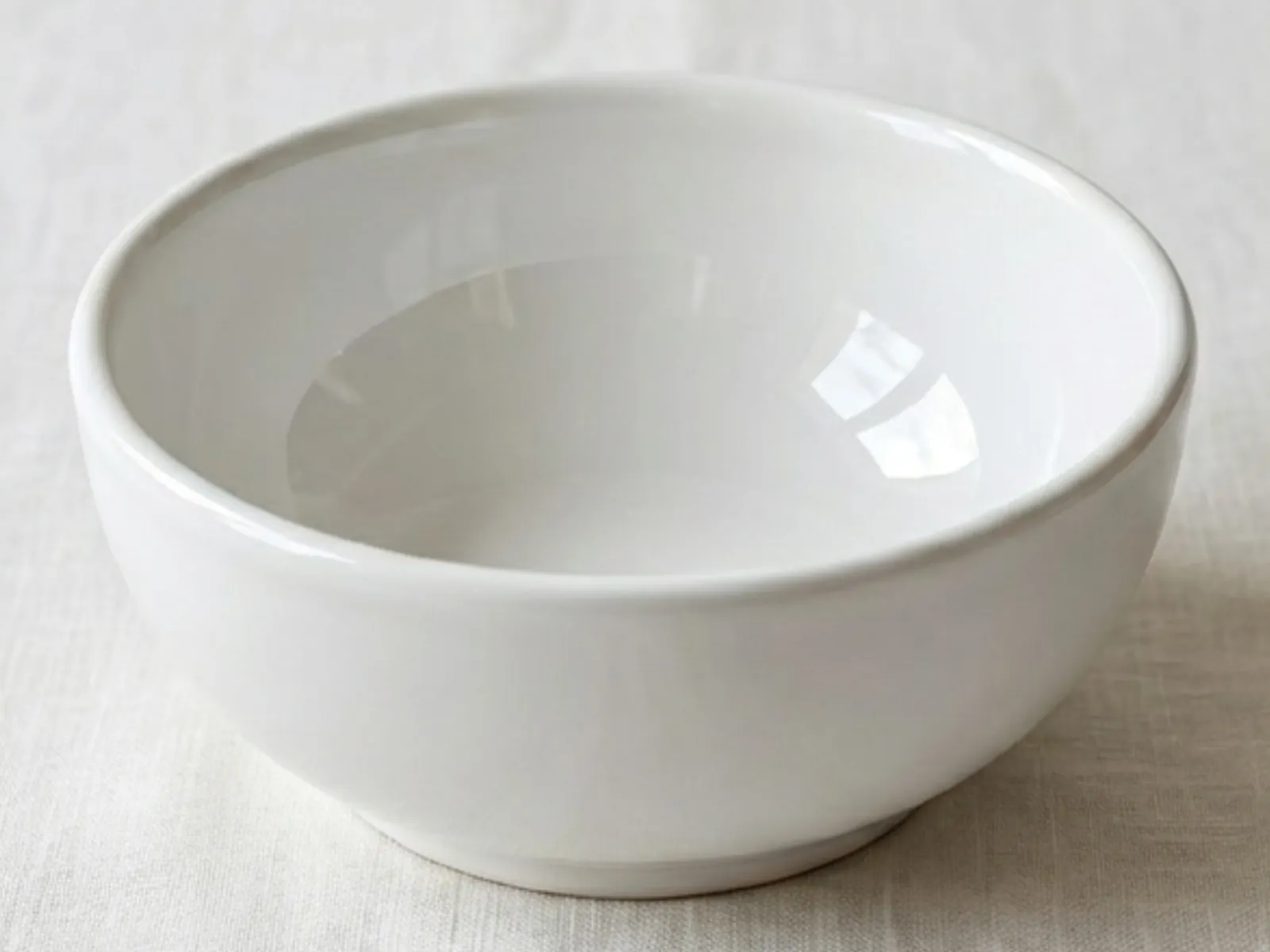
Porcelain and glass can go in both the microwave and the dishwasher. Stainless steel can go in the dishwasher but not the microwave. Plastic and melamine survive both, but heat increases what they release into food, so they are best kept out of the microwave.
At a glance
| Material | Microwave | Dishwasher |
|---|---|---|
| Porcelain | Yes, if it has no metallic trim | Yes |
| Tempered glass | Yes | Yes |
| Stainless steel | No (USDA) | Yes |
| Silicone | Usually yes | Yes, but it takes on detergent fragrance |
| Plastic | Better not: heating releases micro- and nanoplastics (UNL, 2023) | Usually, but heat wears the surface |
| Melamine or bamboo composite | No | Heat may increase melamine and formaldehyde migration (European Commission) |
For a busy parent, the microwave and dishwasher aren’t just conveniences—they are survival tools. Whether it’s warming up a quick batch of homemade puree or sanitizing a messy day’s worth of dishes, these appliances are essential to the modern household.
However, many parents find themselves hesitating before pressing “start.” We’ve all seen the news reports about chemicals leaching into food under heat. Today, we’re looking at the science of non-toxic heating and why your choice of material is the most important ingredient in your child’s meal.
The Hidden Danger of Heat: Plastic and Melamine
Many products marketed as “natural” or “convenient” carry hidden risks when exposed to high temperatures. As we have explored, many bamboo plates are actually bamboo composites held together by melamine-formaldehyde resins.
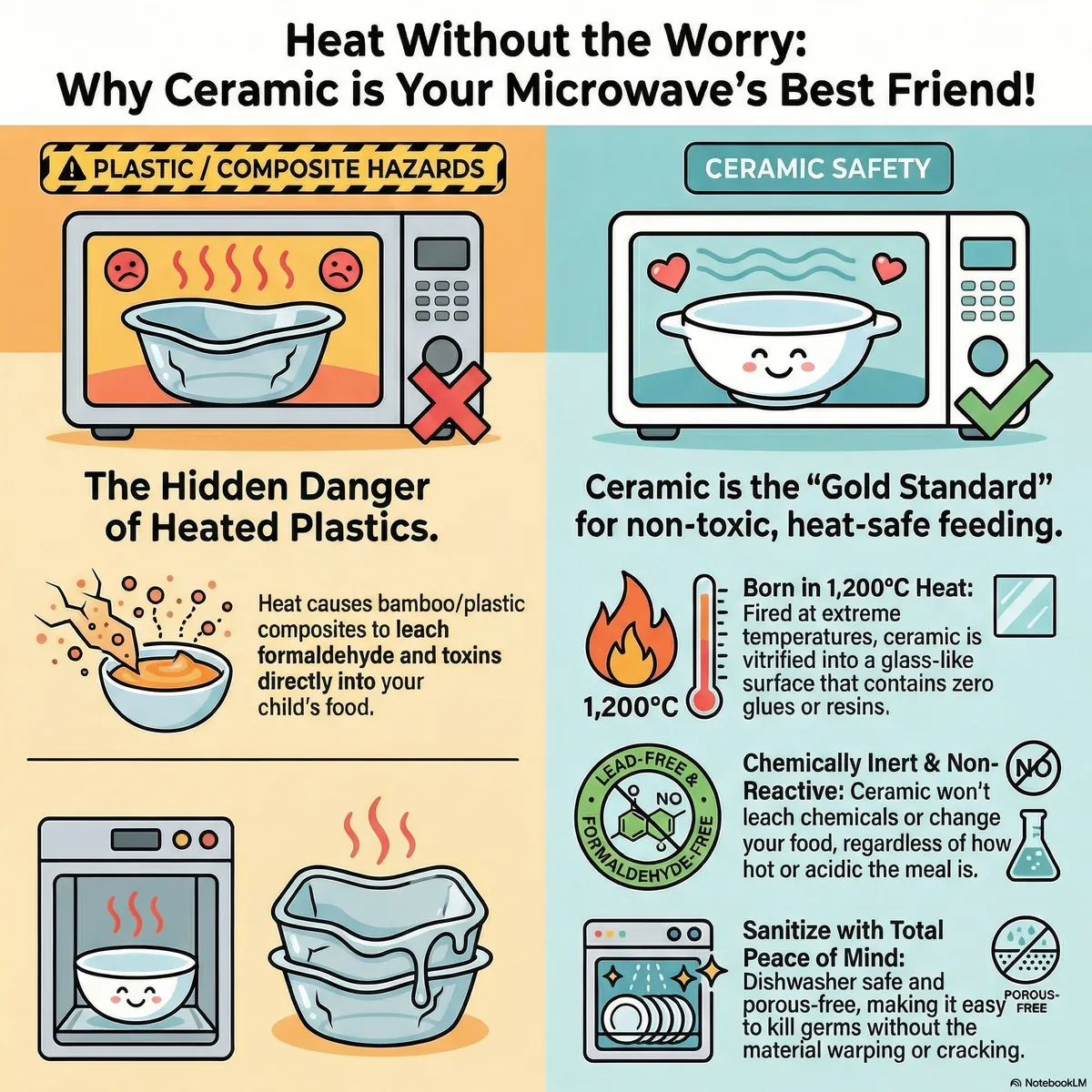
When these materials are exposed to warm meals or the intense heat of a dishwasher, the chemical binders can break down. This causes the plate to leach formaldehyde—a known toxin—directly into your child’s food. Furthermore, the harsh environment of a dishwasher can cause these resin-based materials to crack or warp, which not only ruins the dish but can also create potential choking hazards.
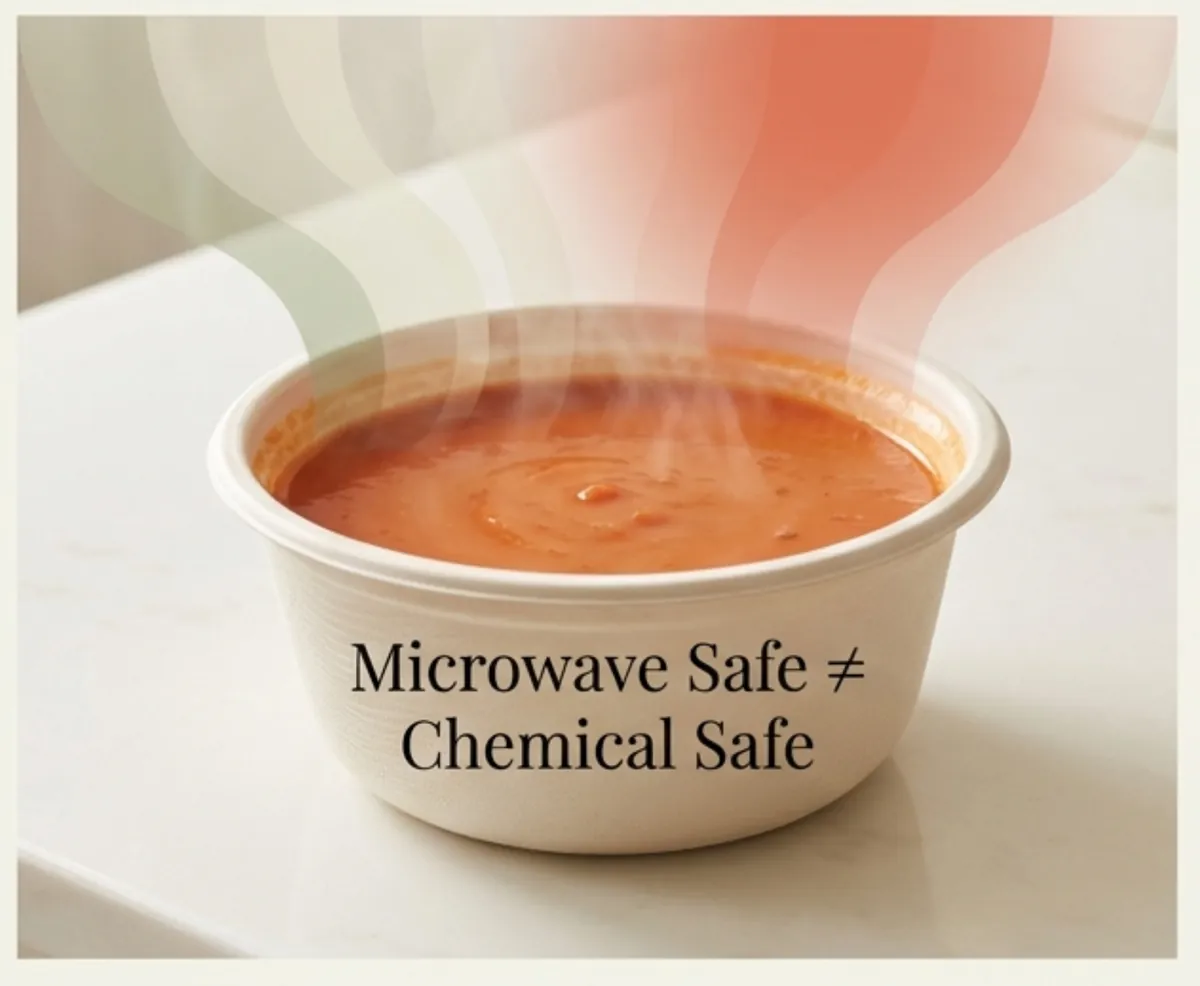
How much plastic are we talking about? In a 2023 study published in Environmental Science & Technology, engineers at the University of Nebraska–Lincoln microwaved plastic baby food containers at full power for three minutes and found that, in some cases, more than 4 million microplastic and 2 billion nanoplastic particles were released from each square centimetre of container (University of Nebraska–Lincoln). Melamine is no better: the European Commission warns that heating melamine-based bamboo plastics, or using them for hot food, may increase the amount of melamine and formaldehyde that migrates into food.
The Ceramic Advantage: Naturally Heat-Resistant
If you are looking for a microwave safe baby feeding set, ceramic is the gold standard for a reason. Unlike plastic or composites, high-fired ceramic is built to withstand extreme temperatures.
- Chemically Inert and Non-Reactive: One of the greatest benefits of ceramic is that it is non-reactive. This means it will not leach toxins into your child’s meal, regardless of the acidity or the temperature of the food.
- Vitrified for Purity: Our ceramic is fired at 1,200–1,300 °C, a process called vitrification. This creates a glass-like surface that contains zero glues, plastic binders, or harmful resins. Because it was born in fire, it is naturally at home in your microwave.
- Formaldehyde-Free: Ceramic has no resin, so there is no formaldehyde to release. Lead and cadmium depend on the glaze, so choose ceramic that has passed lead and cadmium testing, as ours has.
Convenience Meets Peace of Mind
A dishwasher safe baby bowl should do more than just survive the wash; it should be easy to sanitize.
Unlike porous materials that can absorb water or harbor mold, the vitrified surface of ceramic allows you to sanitize the plate easily after a messy meal. You can run it through the hottest dishwasher cycle knowing that the material won’t degrade, leach chemicals, or lose its beautiful finish. It’s the ultimate solution for parents who refuse to compromise between safety and their limited time.
The Bottom Line
You shouldn’t have to choose between a quick meal and a safe one. By switching to 100% pure ceramic, you are investing in dinnerware that is as resilient as it is pure. It’s time to stop worrying about what’s happening inside the microwave and start enjoying the peace of mind that comes with truly non-toxic heating.
Ready to simplify your kitchen routine? See our divided porcelain plate: plate and silicone base both go in the microwave and the dishwasher.
Updated September 2026: added a short answer and a material-by-material table with sources, and corrected the note on lead.
Is it safe to microwave plastic toddler plates?
It is better not to. In a 2023 University of Nebraska–Lincoln study, plastic baby food containers microwaved at full power for three minutes released, in some cases, more than 4 million microplastic and 2 billion nanoplastic particles from each square centimetre. Porcelain can go in the microwave, and our plate can go in with its silicone base on.
Are melamine or bamboo plates safe for kids?
Neither is a good choice for hot food or the microwave. The European Commission found that as bamboo-melamine plastics break down with use, melamine and formaldehyde can migrate into food above safe limits, and that heating, hot food and the dishwasher may increase how much migrates. Porcelain has no resin or binder to release. More on bamboo plates.
Can porcelain go in the microwave?
Yes. Vitrified porcelain has no resin, binder or plastic to break down with heat. Our plate can go in with its silicone base on.
Keep reading
- Is BPA-Free Plastic Safe for Toddler Plates?
- Are Bamboo Kids’ Plates Safe? The Melamine Problem
- Why Silicone Baby Plates Smell and Taste Like Soap
The plate this series is about. okiboo’s 8-inch divided porcelain toddler plate sits in a flat silicone base that holds it steady without suction cups, then lifts off and covers the plate for the fridge. Lab-tested for lead and cadmium, microwave and dishwasher safe.