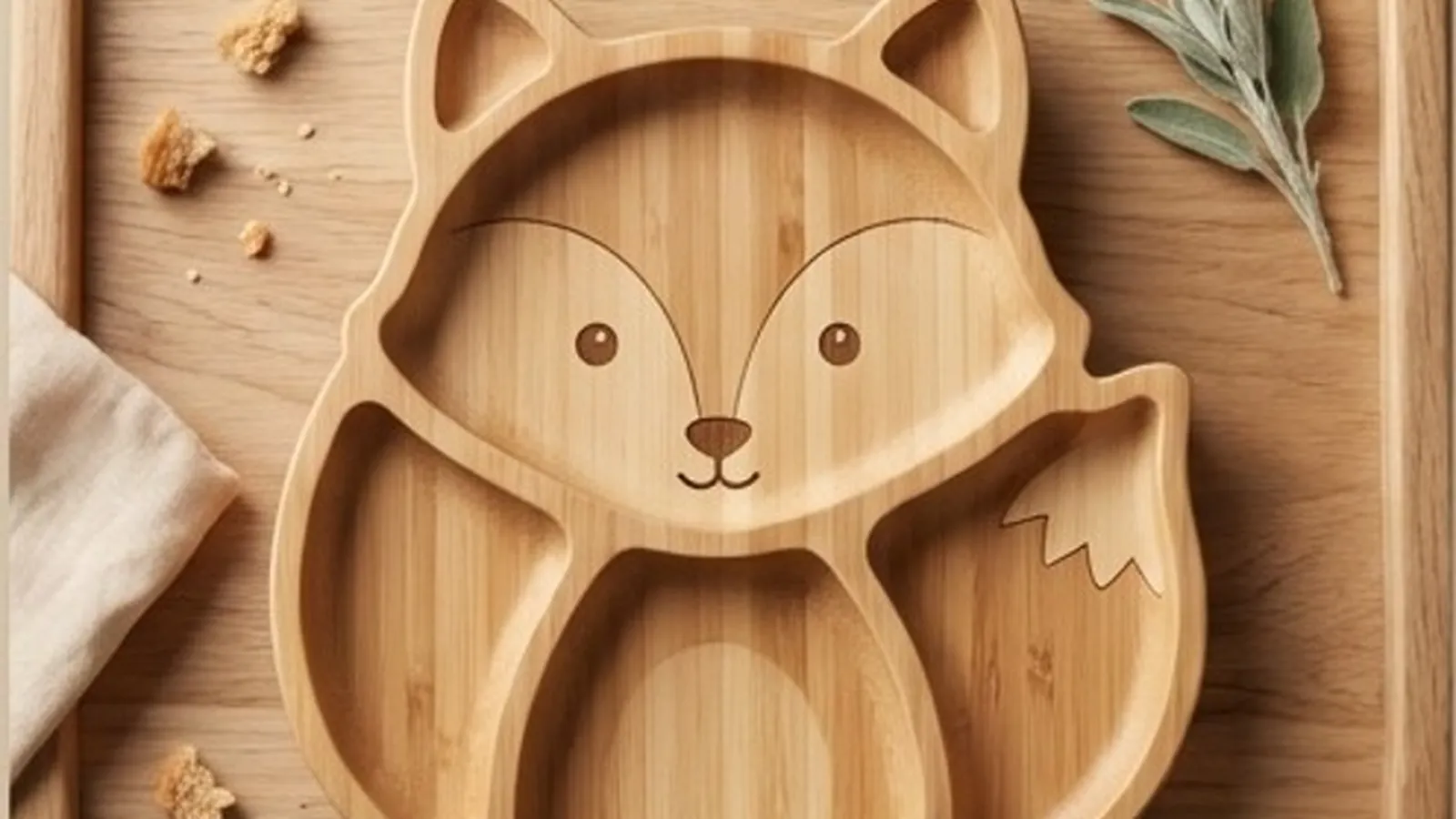
Usually not for hot food. Most bamboo kids’ plates are bamboo powder held together with melamine-formaldehyde resin, and the European Commission warns that heat, hot food and the dishwasher can increase how much melamine and formaldehyde moves into food, and advises against using them for infants and children.
When parents decide to ditch plastic, many reach for bamboo dinnerware. With its matte finish, earthy tones, and “eco-friendly” label, it seems like the perfect choice for a non-toxic home.
However, many of the most popular bamboo dishes are not solid wood at all. They are bamboo composites, held together with plastic resin.
The Glue Holding It Together: Melamine and Formaldehyde
To turn bamboo fibers into a durable, colorful plate, many manufacturers use a “binder”—specifically, melamine-formaldehyde resin. While these plates look like wood, they are plastic: bamboo powder mixed into melamine-formaldehyde resin. The European Union has not authorised bamboo as an additive in plastic food-contact materials, and in a year-long coordinated enforcement action that ended in April 2022, the 21 participating countries reported 748 cases of such products. The European Commission warned that as the plastic degrades, “melamine and formaldehyde can migrate to food in risky amounts.”
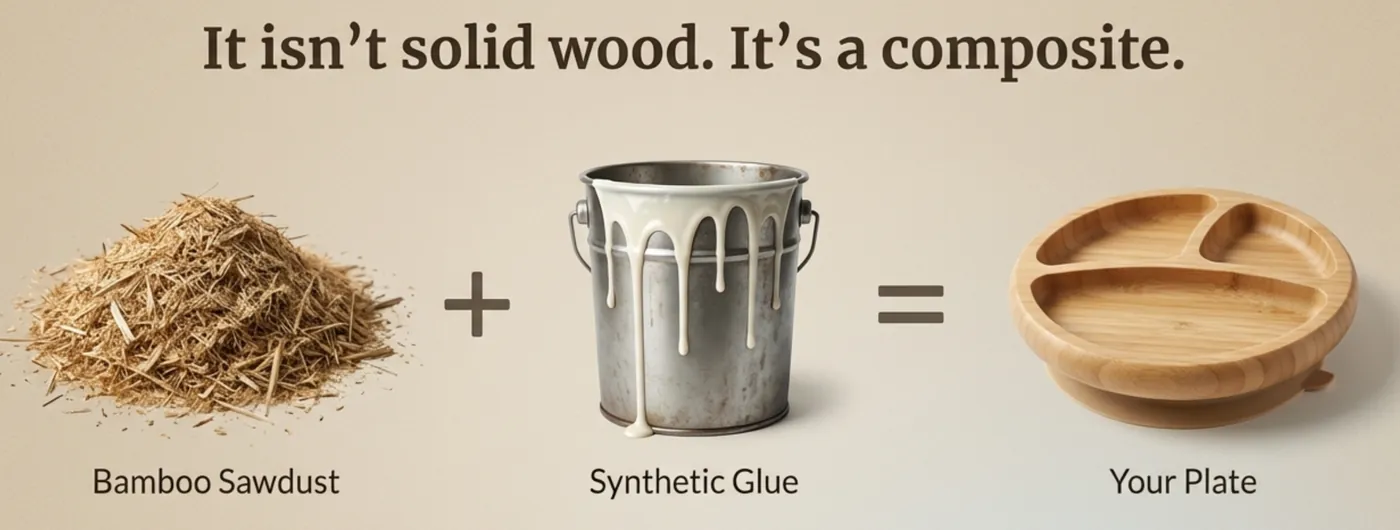
The danger isn’t just that the “natural” claim is misleading; it’s what happens when that resin meets your baby’s food.
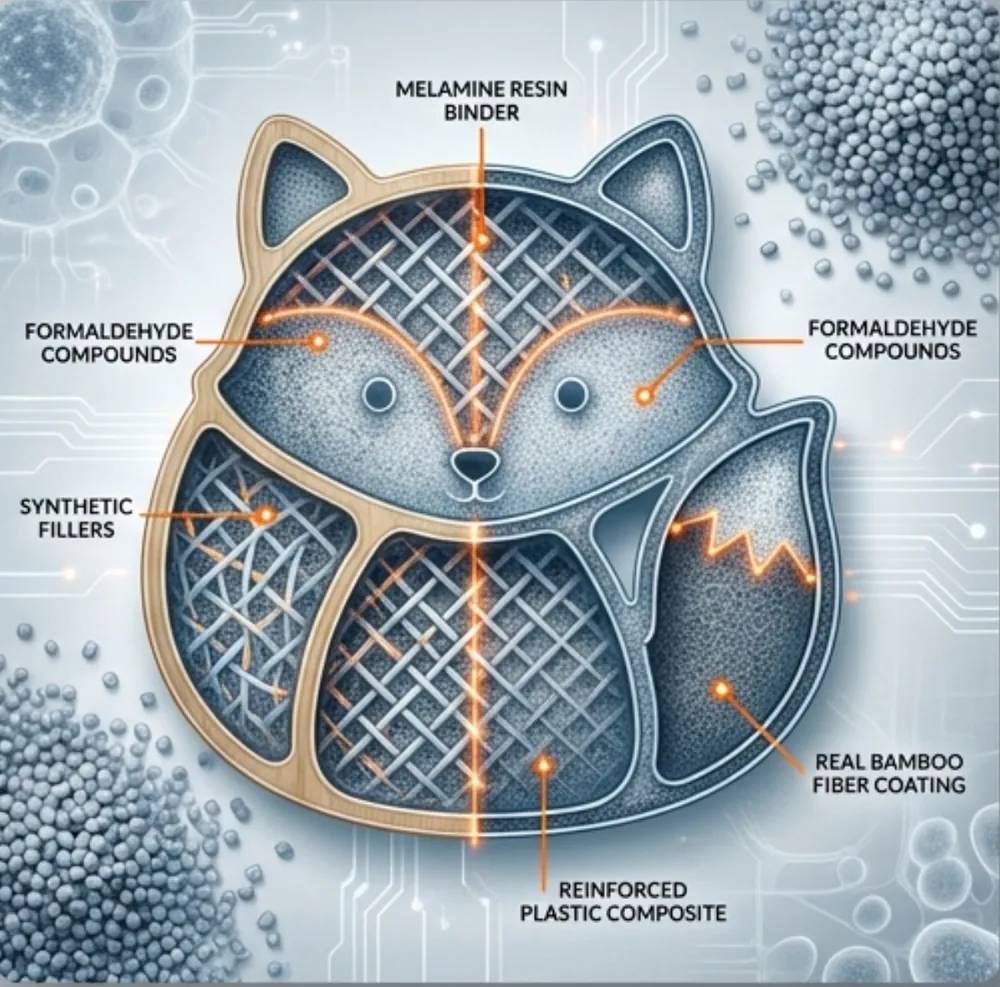
Why It’s a Risk: The Leaching Effect
Melamine-formaldehyde resin is not stable under heat or acidity. Research has shown several critical risks:
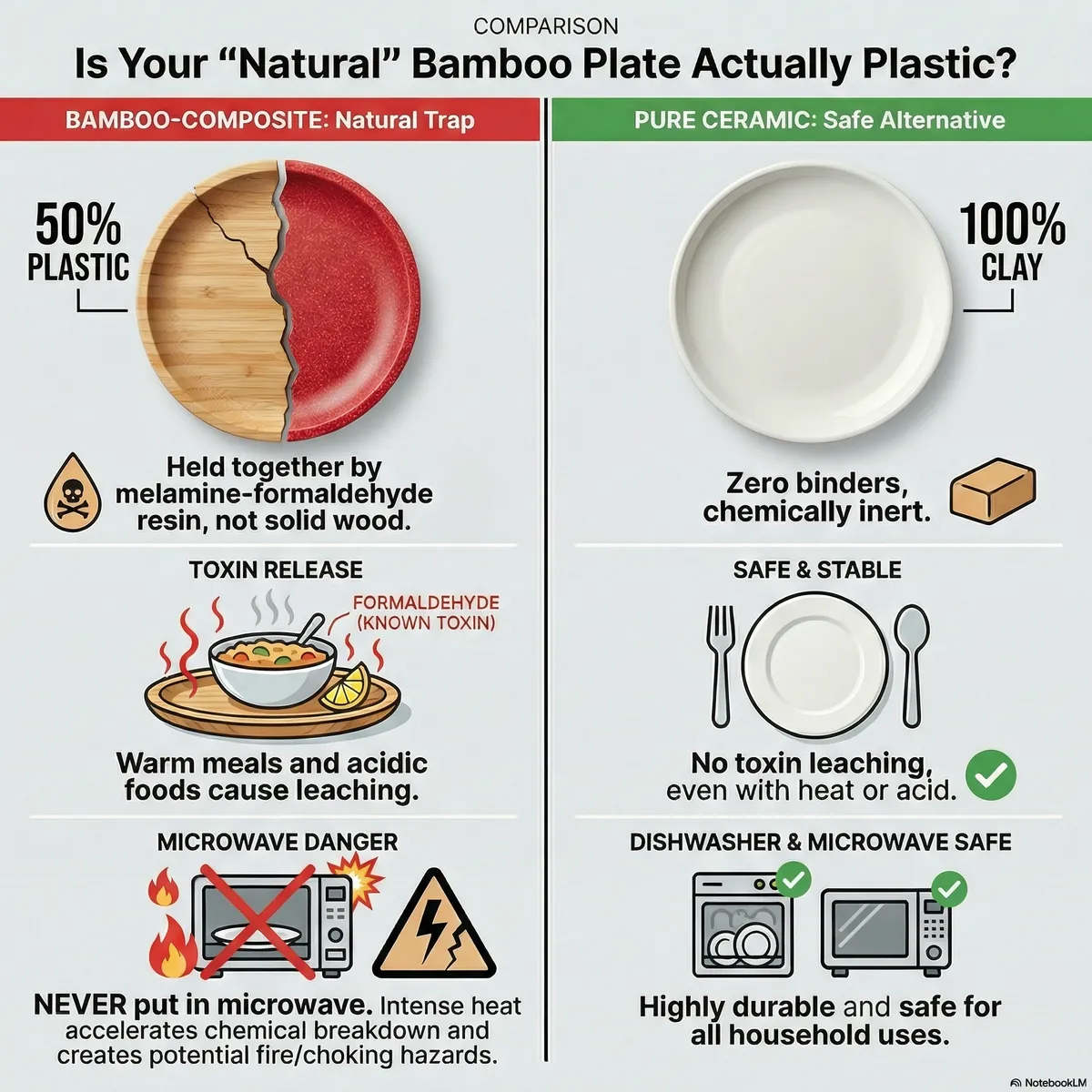
- Formaldehyde Leaching: When exposed to warm meals or acidic foods (like tomato sauce or citrus), these plates can release formaldehyde, a known toxin.
- Heat makes it worse: the European Commission notes that “heating the article, using it for hot foods or washing it in the dishwasher may increase the amounts of melamine and formaldehyde which migrate to the foods,” and says their use for infants and children, who are more sensitive, should be avoided.
- The Microwave Danger: Bamboo fibers can catch fire in a microwave, and the intense heat significantly accelerates the breakdown of the chemical binders, dumping toxins directly into your child’s meal.
The “Natural” Maintenance Struggle
Beyond the chemical risks, true 100% natural bamboo is a high-maintenance material. Because it is porous, it can absorb water and harbor mold if not hand-washed and oiled frequently. It is rarely dishwasher-safe, as the harsh environment causes it to crack or splinter, creating a potential choking hazard.
The Safe Alternative: 100% Pure Ceramic
If you want the safety of a natural material without the “resin trap,” high-fired ceramic is the strategic choice.
- Zero Binders: Unlike bamboo composites, our ceramic is made from pure clay and minerals, fired at 1,200–1,300 °C. This process, called vitrification, fuses the material into a solid, glass-like surface that requires no glues or plastic binders.
- Chemically Inert: Ceramic is completely non-reactive. It won’t leach formaldehyde, even if you serve steaming hot soup or highly acidic fruit purees.
- Dishwasher & Microwave Safe: Because it is a stable, high-heat material, it can be sanitized in the dishwasher and used in the microwave without warping or releasing chemicals.
The Bottom Line
Don’t let a “natural” aesthetic compromise your baby’s health. “Bamboo-blend” is often just another name for plastic with better marketing. For a truly non-toxic, heirloom-quality experience, return to the earth’s most stable material: pure ceramic.
Looking for a plate that’s as safe as it looks? See our divided porcelain plate: lab-tested for lead and cadmium, with no resin or binder in it.
Are melamine or bamboo plates safe for kids?
Neither is a good choice for hot food or the microwave. The European Commission found that as bamboo-melamine plastics break down with use, melamine and formaldehyde can migrate into food above safe limits, and that heating, hot food and the dishwasher may increase how much migrates. Porcelain has no resin or binder to release. More on bamboo plates.
Can bamboo plates go in the microwave?
Not if they are bound with melamine resin, so check the label. The European Commission notes that heating these plates, using them for hot food or washing them in the dishwasher may increase the amount of melamine and formaldehyde that moves into food.
Keep reading
- Is BPA-Free Plastic Safe for Toddler Plates?
- Microwave & Dishwasher Safety—Heating Without the Chemical Worry
- How Long Do Toddler Plates Last? Plastic vs Ceramic
- Are Ceramic Plates Safe for Toddlers?
The plate this series is about. okiboo’s 8-inch divided porcelain toddler plate sits in a flat silicone base that holds it steady without suction cups, then lifts off and covers the plate for the fridge. Lab-tested for lead and cadmium, microwave and dishwasher safe.